The Book of Abraham
Translated by Joseph Smith
صحف ابراهيم
كامله ترجمه جوزيف سميث سنه ١٨٤٥
نسخه كامله نادره من المستحيل العثور عليها الان ، مكتوبه بخط يد ابراهيم عليه السلام، في مصر
A Translation of some ancient Records that have fallen into our hands from the catacombs of Egypt. The writings of Abraham while he was in Egypt, called the Book of Abraham, written by his own hand, upon papyrus.
صحف ابراهيم.pdf
Book of Abraham Manuscripts 1-4
See also rare book of Abraham, the book of the revelation of Abraham 1889 by Prof Bonwtesh
Chapter 1
Abraham seeks the blessings of the patriarchal order—He is persecuted by false priests in Chaldea—Jehovah saves him—The origins and government of Egypt are reviewed.
1 In the land of the Chaldeans, at the residence of my fathers, I, Abraham, saw that it was needful for me to obtain another place of residence;
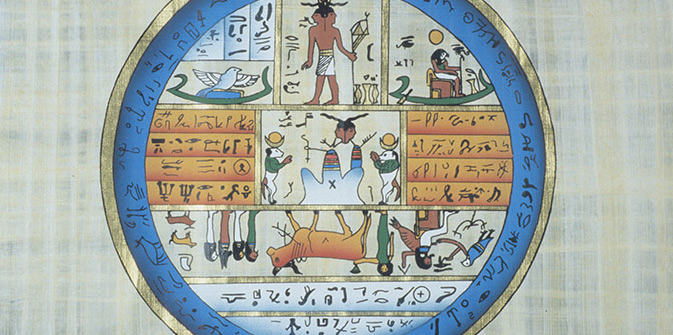
2 And, finding there was greater happiness and peace and rest for me, I sought for the blessings of the fathers, and the right whereunto I should be ordained to administer the same; having been myself a follower of righteousness, desiring also to be one who possessed great knowledge, and to be a greater follower of righteousness, and to possess a greater knowledge, and to be a father of many nations, a prince of peace, and desiring to receive instructions, and to keep the commandments of God, I became a rightful heir, a High Priest, holding the right belonging to the fathers.
3 It was conferred upon me from the fathers; it came down from the fathers, from the beginning of time, yea, even from the beginning, or before the foundation of the earth, down to the present time, even the right of the firstborn, or the first man, who is Adam, or first father, through the fathers unto me.
4 I sought for mine appointment unto the Priesthood according to the appointment of God unto the fathers concerning the seed.
5 My fathers, having turned from their righteousness, and from the holy commandments which the Lord their God had given unto them, unto the worshiping of the gods of the heathen, utterly refused to hearken to my voice;
6 For their hearts were set to do evil, and were wholly turned to the god of Elkenah, and the god of Libnah, and the god of Mahmackrah, and the god of Korash, and the god of Pharaoh, king of Egypt;
7 Therefore they turned their hearts to the sacrifice of the heathen in offering up their children unto these dumb idols, and hearkened not unto my voice, but endeavored to take away my life by the hand of the priest of Elkenah. The priest of Elkenah was also the priest of Pharaoh.
8 Now, at this time it was the custom of the priest of Pharaoh, the king of Egypt, to offer up upon the altar which was built in the land of Chaldea, for the offering unto these strange gods, men, women, and children.
9 And it came to pass that the priest made an offering unto the god of Pharaoh, and also unto the god of Shagreel, even after the manner of the Egyptians. Now the god of Shagreel was the sun.
10 Even the thank-offering of a child did the priest of Pharaoh offer upon the altar which stood by the hill called Potiphar’s Hill, at the head of the plain of Olishem.
11 Now, this priest had offered upon this altar three virgins at one time, who were the daughters of Onitah, one of the royal descent directly from the loins of Ham. These virgins were offered up because of their virtue; they would not bow down to worship gods of wood or of stone, therefore they were killed upon this altar, and it was done after the manner of the Egyptians.
12 And it came to pass that the priests laid violence upon me, that they might slay me also, as they did those virgins upon this altar; and that you may have a knowledge of this altar, I will refer you to the representation at the commencement of this record.
13 It was made after the form of a bedstead, such as was had among the Chaldeans, and it stood before the gods of Elkenah, Libnah, Mahmackrah, Korash, and also a god like unto that of Pharaoh, king of Egypt.
14 That you may have an understanding of these gods, I have given you the fashion of them in the figures at the beginning, which manner of figures is called by the Chaldeans Rahleenos, which signifies hieroglyphics.
15 And as they lifted up their hands upon me, that they might offer me up and take away my life, behold, I lifted up my voice unto the Lord my God, and the Lord hearkened and heard, and he filled me with the vision of the Almighty, and the angel of his presence stood by me, and immediately unloosed my bands;
16 And his voice was unto me: Abraham, Abraham, behold, my name is Jehovah, and I have heard thee, and have come down to deliver thee, and to take thee away from thy father’s house, and from all thy kinsfolk, into a strange land which thou knowest not of;
17 And this because they have turned their hearts away from me, to worship the god of Elkenah, and the god of Libnah, and the god of Mahmackrah, and the god of Korash, and the god of Pharaoh, king of Egypt; therefore I have come down to visit them, and to destroy him who hath lifted up his hand against thee, Abraham, my son, to take away thy life.
18 Behold, I will lead thee by my hand, and I will take thee, to put upon thee my name, even the Priesthood of thy father, and my power shall be over thee.
19 As it was with Noah so shall it be with thee; but through thy ministry my name shall be known in the earth forever, for I am thy God.
20 Behold, Potiphar’s Hill was in the land of Ur, of Chaldea. And the Lord broke down the altar of Elkenah, and of the gods of the land, and utterly destroyed them, and smote the priest that he died; and there was great mourning in Chaldea, and also in the court of Pharaoh; which Pharaoh signifies king by royal blood.
21 Now this king of Egypt was a descendant from the loins of Ham, and was a partaker of the blood of the Canaanites by birth.
22 From this descent sprang all the Egyptians, and thus the blood of the Canaanites was preserved in the land.
23 The land of Egypt being first discovered by a woman, who was the daughter of Ham, and the daughter of Egyptus, which in the Chaldean signifies Egypt, which signifies that which is forbidden;
24 When this woman discovered the land it was under water, who afterward settled her sons in it; and thus, from Ham, sprang that race which preserved the curse in the land.
25 Now the first government of Egypt was established by Pharaoh, the eldest son of Egyptus, the daughter of Ham, and it was after the manner of the government of Ham, which was patriarchal.
26 Pharaoh, being a righteous man, established his kingdom and judged his people wisely and justly all his days, seeking earnestly to imitate that order established by the fathers in the first generations, in the days of the first patriarchal reign, even in the reign of Adam, and also of Noah, his father, who blessed him with the blessings of the earth, and with the blessings of wisdom, but cursed him as pertaining to the Priesthood.
27 Now, Pharaoh being of that lineage by which he could not have the right of Priesthood, notwithstanding the Pharaohs would fain claim it from Noah, through Ham, therefore my father was led away by their idolatry;
28 But I shall endeavor, hereafter, to delineate the chronology running back from myself to the beginning of the creation, for the records have come into my hands, which I hold unto this present time.
29 Now, after the priest of Elkenah was smitten that he died, there came a fulfilment of those things which were said unto me concerning the land of Chaldea, that there should be a famine in the land.
30 Accordingly a famine prevailed throughout all the land of Chaldea, and my father was sorely tormented because of the famine, and he repented of the evil which he had determined against me, to take away my life.
31 But the records of the fathers, even the patriarchs, concerning the right of Priesthood, the Lord my God preserved in mine own hands; therefore a knowledge of the beginning of the creation, and also of the planets, and of the stars, as they were made known unto the fathers, have I kept even unto this day, and I shall endeavor to write some of these things upon this record, for the benefit of my posterity that shall come after me.
Chapter 2
Abraham leaves Ur to go to Canaan—Jehovah appears to him at Haran—All gospel blessings are promised to his seed and through his seed to all—He goes to Canaan and on to Egypt.
1 Now the Lord God caused the famine to wax sore in the land of Ur, insomuch that Haran, my brother, died; but Terah, my father, yet lived in the land of Ur, of the Chaldees.
2 And it came to pass that I, Abraham, took Sarai to wife, and Nahor, my brother, took Milcah to wife, who was the daughter of Haran.
3 Now the Lord had said unto me: Abraham, get thee out of thy country, and from thy kindred, and from thy father’s house, unto a land that I will show thee.
4 Therefore I left the land of Ur, of the Chaldees, to go into the land of Canaan; and I took Lot, my brother’s son, and his wife, and Sarai my wife; and also my father followed after me, unto the land which we denominated Haran.
5 And the famine abated; and my father tarried in Haran and dwelt there, as there were many flocks in Haran; and my father turned again unto his idolatry, therefore he continued in Haran.
6 But I, Abraham, and Lot, my brother’s son, prayed unto the Lord, and the Lord appeared unto me, and said unto me: Arise, and take Lot with thee; for I have purposed to take thee away out of Haran, and to make of thee a minister to bear my name in a strange land which I will give unto thy seed after thee for an everlasting possession, when they hearken to my voice.
7 For I am the Lord thy God; I dwell in heaven; the earth is my footstool; I stretch my hand over the sea, and it obeys my voice; I cause the wind and the fire to be my chariot; I say to the mountains—Depart hence—and behold, they are taken away by a whirlwind, in an instant, suddenly.
8 My name is Jehovah, and I know the end from the beginning; therefore my hand shall be over thee.
9 And I will make of thee a great nation, and I will bless thee above measure, and make thy name great among all nations, and thou shalt be a blessing unto thy seed after thee, that in their hands they shall bear this ministry and Priesthood unto all nations;
10 And I will bless them through thy name; for as many as receive this Gospel shall be called after thy name, and shall be accounted thy seed, and shall rise up and bless thee, as their father;
11 And I will bless them that bless thee, and curse them that curse thee; and in thee (that is, in thy Priesthood) and in thy seed (that is, thy Priesthood), for I give unto thee a promise that this right shall continue in thee, and in thy seed after thee (that is to say, the literal seed, or the seed of the body) shall all the families of the earth be blessed, even with the blessings of the Gospel, which are the blessings of salvation, even of life eternal.
12 Now, after the Lord had withdrawn from speaking to me, and withdrawn his face from me, I said in my heart: Thy servant has sought thee earnestly; now I have found thee;
13 Thou didst send thine angel to deliver me from the gods of Elkenah, and I will do well to hearken unto thy voice, therefore let thy servant rise up and depart in peace.
14 So I, Abraham, departed as the Lord had said unto me, and Lot with me; and I, Abraham, was sixty and two years old when I departed out of Haran.
15 And I took Sarai, whom I took to wife when I was in Ur, in Chaldea, and Lot, my brother’s son, and all our substance that we had gathered, and the souls that we had won in Haran, and came forth in the way to the land of Canaan, and dwelt in tents as we came on our way;
16 Therefore, eternity was our covering and our rock and our salvation, as we journeyed from Haran by the way of Jershon, to come to the land of Canaan.
17 Now I, Abraham, built an altar in the land of Jershon, and made an offering unto the Lord, and prayed that the famine might be turned away from my father’s house, that they might not perish.
18 And then we passed from Jershon through the land unto the place of Sechem; it was situated in the plains of Moreh, and we had already come into the borders of the land of the Canaanites, and I offered sacrifice there in the plains of Moreh, and called on the Lord devoutly, because we had already come into the land of this idolatrous nation.
19 And the Lord appeared unto me in answer to my prayers, and said unto me: Unto thy seed will I give this land.
20 And I, Abraham, arose from the place of the altar which I had built unto the Lord, and removed from thence unto a mountain on the east of Bethel, and pitched my tent there, Bethel on the west, and Hai on the east; and there I built another altar unto the Lord, and called again upon the name of the Lord.
21 And I, Abraham, journeyed, going on still towards the south; and there was a continuation of a famine in the land; and I, Abraham, concluded to go down into Egypt, to sojourn there, for the famine became very grievous.
22 And it came to pass when I was come near to enter into Egypt, the Lord said unto me: Behold, Sarai, thy wife, is a very fair woman to look upon;
23 Therefore it shall come to pass, when the Egyptians shall see her, they will say—She is his wife; and they will kill you, but they will save her alive; therefore see that ye do on this wise:
24 Let her say unto the Egyptians, she is thy sister, and thy soul shall live.
25 And it came to pass that I, Abraham, told Sarai, my wife, all that the Lord had said unto me—Therefore say unto them, I pray thee, thou art my sister, that it may be well with me for thy sake, and my soul shall live because of thee.
end #detail
Chapter 3
Abraham learns about the sun, moon, and stars by means of the Urim and Thummim—The Lord reveals to him the eternal nature of spirits—He learns of pre-earth life, foreordination, the Creation, the choosing of a Redeemer, and the second estate of man.
1 And I, Abraham, had the Urim and Thummim, which the Lord my God had given unto me, in Ur of the Chaldees;
2 And I saw the stars, that they were very great, and that one of them was nearest unto the throne of God; and there were many great ones which were near unto it;
3 And the Lord said unto me: These are the governing ones; and the name of the great one is Kolob, because it is near unto me, for I am the Lord thy God: I have set this one to govern all those which belong to the same order as that upon which thou standest.

4 And the Lord said unto me, by the Urim and Thummim, that Kolob was after the manner of the Lord, according to its times and seasons in the revolutions thereof; that one revolution was a day unto the Lord, after his manner of reckoning, it being one thousand years according to the time appointed unto that whereon thou standest. This is the reckoning of the Lord’s time, according to the reckoning of Kolob.
5 And the Lord said unto me: The planet which is the lesser light, lesser than that which is to rule the day, even the night, is above or greater than that upon which thou standest in point of reckoning, for it moveth in order more slow; this is in order because it standeth above the earth upon which thou standest, therefore the reckoning of its time is not so many as to its number of days, and of months, and of years.
6 And the Lord said unto me: Now, Abraham, these two facts exist, behold thine eyes see it; it is given unto thee to know the times of reckoning, and the set time, yea, the set time of the earth upon which thou standest, and the set time of the greater light which is set to rule the day, and the set time of the lesser light which is set to rule the night.
7 Now the set time of the lesser light is a longer time as to its reckoning than the reckoning of the time of the earth upon which thou standest.
8 And where these two facts exist, there shall be another fact above them, that is, there shall be another planet whose reckoning of time shall be longer still;
9 And thus there shall be the reckoning of the time of one planet above another, until thou come nigh unto Kolob, which Kolob is after the reckoning of the Lord’s time; which Kolob is set nigh unto the throne of God, to govern all those planets which belong to the same order as that upon which thou standest.
10 And it is given unto thee to know the set time of all the stars that are set to give light, until thou come near unto the throne of God.
11 Thus I, Abraham, talked with the Lord, face to face, as one man talketh with another; and he told me of the works which his hands had made;
12 And he said unto me: My son, my son (and his hand was stretched out), behold I will show you all these. And he put his hand upon mine eyes, and I saw those things which his hands had made, which were many; and they multiplied before mine eyes, and I could not see the end thereof.
13 And he said unto me: This is Shinehah, which is the sun. And he said unto me: Kokob, which is star. And he said unto me: Olea, which is the moon. And he said unto me: Kokaubeam, which signifies stars, or all the great lights, which were in the firmament of heaven.
14 And it was in the night time when the Lord spake these words unto me: I will multiply thee, and thy seed after thee, like unto these; and if thou canst count the number of sands, so shall be the number of thy seeds.
15 And the Lord said unto me: Abraham, I show these things unto thee before ye go into Egypt, that ye may declare all these words.
16 If two things exist, and there be one above the other, there shall be greater things above them; therefore Kolob is the greatest of all the Kokaubeam that thou hast seen, because it is nearest unto me.
17 Now, if there be two things, one above the other, and the moon be above the earth, then it may be that a planet or a star may exist above it; and there is nothing that the Lord thy God shall take in his heart to do but what he will do it.
18 Howbeit that he made the greater star; as, also, if there be two spirits, and one shall be more intelligent than the other, yet these two spirits, notwithstanding one is more intelligent than the other, have no beginning; they existed before, they shall have no end, they shall exist after, for they are gnolaum, or eternal.
19 And the Lord said unto me: These two facts do exist, that there are two spirits, one being more intelligent than the other; there shall be another more intelligent than they; I am the Lord thy God, I am more intelligent than they all.
20 The Lord thy God sent his angel to deliver thee from the hands of the priest of Elkenah.
21 I dwell in the midst of them all; I now, therefore, have come down unto thee to declare unto thee the works which my hands have made, wherein my wisdom excelleth them all, for I rule in the heavens above, and in the earth beneath, in all wisdom and prudence, over all the intelligences thine eyes have seen from the beginning; I came down in the beginning in the midst of all the intelligences thou hast seen.
22 Now the Lord had shown unto me, Abraham, the intelligences that were organized before the world was; and among all these there were many of the noble and great ones;
23 And God saw these souls that they were good, and he stood in the midst of them, and he said: These I will make my rulers; for he stood among those that were spirits, and he saw that they were good; and he said unto me: Abraham, thou art one of them; thou wast chosen before thou wast born.
24 And there stood one among them that was like unto God, and he said unto those who were with him: We will go down, for there is space there, and we will take of these materials, and we will make an earth whereon these may dwell;
25 And we will prove them herewith, to see if they will do all things whatsoever the Lord their God shall command them;
26 And they who keep their first estate shall be added upon; and they who keep not their first estate shall not have glory in the same kingdom with those who keep their first estate; and they who keep their second estate shall have glory added upon their heads for ever and ever.
27 And the Lord said: Whom shall I send? And one answered like unto the Son of Man: Here am I, send me. And another answered and said: Here am I, send me. And the Lord said: I will send the first.
28 And the second was angry, and kept not his first estate; and, at that day, many followed after him.
Chapter 4
The Gods plan the creation of the earth and all life thereon—Their plans for the six days of creation are set forth.
1 And then the Lord said: Let us go down. And they went down at the beginning, and they, that is the Gods, organized and formed the heavens and the earth.
2 And the earth, after it was formed, was empty and desolate, because they had not formed anything but the earth; and darkness reigned upon the face of the deep, and the Spirit of the Gods was brooding upon the face of the waters.
3 And they (the Gods) said: Let there be light; and there was light.
4 And they (the Gods) comprehended the light, for it was bright; and they divided the light, or caused it to be divided, from the darkness.
5 And the Gods called the light Day, and the darkness they called Night. And it came to pass that from the evening until morning they called night; and from the morning until the evening they called day; and this was the first, or the beginning, of that which they called day and night.
6 And the Gods also said: Let there be an expanse in the midst of the waters, and it shall divide the waters from the waters.
7 And the Gods ordered the expanse, so that it divided the waters which were under the expanse from the waters which were above the expanse; and it was so, even as they ordered.
8 And the Gods called the expanse, Heaven. And it came to pass that it was from evening until morning that they called night; and it came to pass that it was from morning until evening that they called day; and this was the second time that they called night and day.
9 And the Gods ordered, saying: Let the waters under the heaven be gathered together unto one place, and let the earth come up dry; and it was so as they ordered;
10 And the Gods pronounced the dry land, Earth; and the gathering together of the waters, pronounced they, Great Waters; and the Gods saw that they were obeyed.
11 And the Gods said: Let us prepare the earth to bring forth grass; the herb yielding seed; the fruit tree yielding fruit, after his kind, whose seed in itself yieldeth its own likeness upon the earth; and it was so, even as they ordered.
12 And the Gods organized the earth to bring forth grass from its own seed, and the herb to bring forth herb from its own seed, yielding seed after his kind; and the earth to bring forth the tree from its own seed, yielding fruit, whose seed could only bring forth the same in itself, after his kind; and the Gods saw that they were obeyed.
13 And it came to pass that they numbered the days; from the evening until the morning they called night; and it came to pass, from the morning until the evening they called day; and it was the third time.
14 And the Gods organized the lights in the expanse of the heaven, and caused them to divide the day from the night; and organized them to be for signs and for seasons, and for days and for years;
15 And organized them to be for lights in the expanse of the heaven to give light upon the earth; and it was so.
16 And the Gods organized the two great lights, the greater light to rule the day, and the lesser light to rule the night; with the lesser light they set the stars also;
17 And the Gods set them in the expanse of the heavens, to give light upon the earth, and to rule over the day and over the night, and to cause to divide the light from the darkness.
18 And the Gods watched those things which they had ordered until they obeyed.
19 And it came to pass that it was from evening until morning that it was night; and it came to pass that it was from morning until evening that it was day; and it was the fourth time.
20 And the Gods said: Let us prepare the waters to bring forth abundantly the moving creatures that have life; and the fowl, that they may fly above the earth in the open expanse of heaven.
21 And the Gods prepared the waters that they might bring forth great whales, and every living creature that moveth, which the waters were to bring forth abundantly after their kind; and every winged fowl after their kind. And the Gods saw that they would be obeyed, and that their plan was good.
22 And the Gods said: We will bless them, and cause them to be fruitful and multiply, and fill the waters in the seas or great waters; and cause the fowl to multiply in the earth.
23 And it came to pass that it was from evening until morning that they called night; and it came to pass that it was from morning until evening that they called day; and it was the fifth time.
24 And the Gods prepared the earth to bring forth the living creature after his kind, cattle and creeping things, and beasts of the earth after their kind; and it was so, as they had said.
25 And the Gods organized the earth to bring forth the beasts after their kind, and cattle after their kind, and every thing that creepeth upon the earth after its kind; and the Gods saw they would obey.
26 And the Gods took counsel among themselves and said: Let us go down and form man in our image, after our likeness; and we will give them dominion over the fish of the sea, and over the fowl of the air, and over the cattle, and over all the earth, and over every creeping thing that creepeth upon the earth.
27 So the Gods went down to organize man in their own image, in the image of the Gods to form they him, male and female to form they them.
28 And the Gods said: We will bless them. And the Gods said: We will cause them to be fruitful and multiply, and replenish the earth, and subdue it, and to have dominion over the fish of the sea, and over the fowl of the air, and over every living thing that moveth upon the earth.
29 And the Gods said: Behold, we will give them every herb bearing seed that shall come upon the face of all the earth, and every tree which shall have fruit upon it; yea, the fruit of the tree yielding seed to them we will give it; it shall be for their meat.
30 And to every beast of the earth, and to every fowl of the air, and to every thing that creepeth upon the earth, behold, we will give them life, and also we will give to them every green herb for meat, and all these things shall be thus organized.
31 And the Gods said: We will do everything that we have said, and organize them; and behold, they shall be very obedient. And it came to pass that it was from evening until morning they called night; and it came to pass that it was from morning until evening that they called day; and they numbered the sixth time.
Chapter 5
The Gods finish Their planning of the creation of all things—They bring to pass the Creation according to Their plans—Adam names every living creature.
1 And thus we will finish the heavens and the earth, and all the hosts of them.
2 And the Gods said among themselves: On the seventh time we will end our work, which we have counseled; and we will rest on the seventh time from all our work which we have counseled.
3 And the Gods concluded upon the seventh time, because that on the seventh time they would rest from all their works which they (the Gods) counseled among themselves to form; and sanctified it. And thus were their decisions at the time that they counseled among themselves to form the heavens and the earth.
4 And the Gods came down and formed these the generations of the heavens and of the earth, when they were formed in the day that the Gods formed the earth and the heavens,
5 According to all that which they had said concerning every plant of the field before it was in the earth, and every herb of the field before it grew; for the Gods had not caused it to rain upon the earth when they counseled to do them, and had not formed a man to till the ground.
6 But there went up a mist from the earth, and watered the whole face of the ground.
7 And the Gods formed man from the dust of the ground, and took his spirit (that is, the man’s spirit), and put it into him; and breathed into his nostrils the breath of life, and man became a living soul.
8 And the Gods planted a garden, eastward in Eden, and there they put the man, whose spirit they had put into the body which they had formed.
9 And out of the ground made the Gods to grow every tree that is pleasant to the sight and good for food; the tree of life, also, in the midst of the garden, and the tree of knowledge of good and evil.
10 There was a river running out of Eden, to water the garden, and from thence it was parted and became into four heads.
11 And the Gods took the man and put him in the Garden of Eden, to dress it and to keep it.
12 And the Gods commanded the man, saying: Of every tree of the garden thou mayest freely eat,
13 But of the tree of knowledge of good and evil, thou shalt not eat of it; for in the time that thou eatest thereof, thou shalt surely die. Now I, Abraham, saw that it was after the Lord’s time, which was after the time of Kolob; for as yet the Gods had not appointed unto Adam his reckoning.
14 And the Gods said: Let us make an help meet for the man, for it is not good that the man should be alone, therefore we will form an help meet for him.
15 And the Gods caused a deep sleep to fall upon Adam; and he slept, and they took one of his ribs, and closed up the flesh in the stead thereof;
16 And of the rib which the Gods had taken from man, formed they a woman, and brought her unto the man.
17 And Adam said: This was bone of my bones, and flesh of my flesh; now she shall be called Woman, because she was taken out of man;
18 Therefore shall a man leave his father and his mother, and shall cleave unto his wife, and they shall be one flesh.
19 And they were both naked, the man and his wife, and were not ashamed.
20 And out of the ground the Gods formed every beast of the field, and every fowl of the air, and brought them unto Adam to see what he would call them; and whatsoever Adam called every living creature, that should be the name thereof.
21 And Adam gave names to all cattle, to the fowl of the air, to every beast of the field; and for Adam, there was found an help meet for him.
A Facsimile from the Book of Abraham
No. 1

Explanation
Fig. 1. The Angel of the Lord.
Fig. 2. Abraham fastened upon an altar.
Fig. 3. The idolatrous priest of Elkenah attempting to offer up Abraham as a sacrifice.
Fig. 4. The altar for sacrifice by the idolatrous priests, standing before the gods of Elkenah, Libnah, Mahmackrah, Korash, and Pharaoh.
Fig. 5. The idolatrous god of Elkenah.
Fig. 6. The idolatrous god of Libnah.
Fig. 7. The idolatrous god of Mahmackrah.
Fig. 8. The idolatrous god of Korash.
Fig. 9. The idolatrous god of Pharaoh.
Fig. 10. Abraham in Egypt.
Fig. 11. Designed to represent the pillars of heaven, as understood by the Egyptians.
Fig. 12. Raukeeyang, signifying expanse, or the firmament over our heads; but in this case, in relation to this subject, the Egyptians meant it to signify Shaumau, to be high, or the heavens, answering to the Hebrew word, Shaumahyeem.
A Facsimile from the Book of Abraham
No. 2
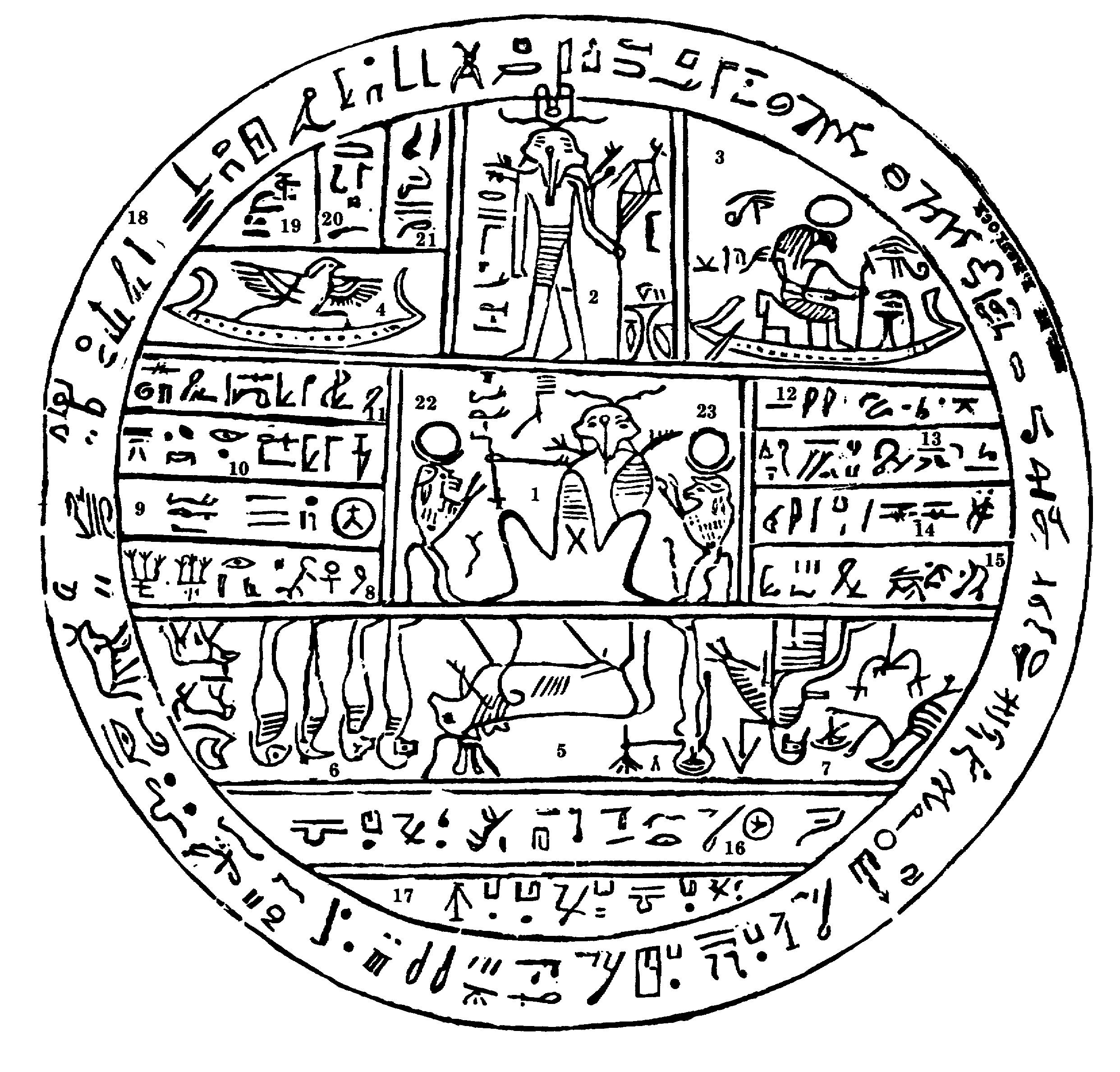
Explanation
Fig. 1. Kolob, signifying the first creation, nearest to the celestial, or the residence of God. First in government, the last pertaining to the measurement of time. The measurement according to celestial time, which celestial time signifies one day to a cubit. One day in Kolob is equal to a thousand years according to the measurement of this earth, which is called by the Egyptians Jah-oh-eh.
Fig. 2. Stands next to Kolob, called by the Egyptians Oliblish, which is the next grand governing creation near to the celestial or the place where God resides; holding the key of power also, pertaining to other planets; as revealed from God to Abraham, as he offered sacrifice upon an altar, which he had built unto the Lord.
Fig. 3. Is made to represent God, sitting upon his throne, clothed with power and authority; with a crown of eternal light upon his head; representing also the grand Key-words of the Holy Priesthood, as revealed to Adam in the Garden of Eden, as also to Seth, Noah, Melchizedek, Abraham, and all to whom the Priesthood was revealed.
Fig. 4. Answers to the Hebrew word Raukeeyang, signifying expanse, or the firmament of the heavens; also a numerical figure, in Egyptian signifying one thousand; answering to the measuring of the time of Oliblish, which is equal with Kolob in its revolution and in its measuring of time.
Fig. 5. Is called in Egyptian Enish-go-on-dosh; this is one of the governing planets also, and is said by the Egyptians to be the Sun, and to borrow its light from Kolob through the medium of Kae-e-vanrash, which is the grand Key, or, in other words, the governing power, which governs fifteen other fixed planets or stars, as also Floeese or the Moon, the Earth and the Sun in their annual revolutions. This planet receives its power through the medium of Kli-flos-is-es, or Hah-ko-kau-beam, the stars represented by numbers 22 and 23, receiving light from the revolutions of Kolob.
Fig. 6. Represents this earth in its four quarters.
Fig. 7. Represents God sitting upon his throne, revealing through the heavens the grand Key-words of the Priesthood; as, also, the sign of the Holy Ghost unto Abraham, in the form of a dove.
Fig. 8. Contains writings that cannot be revealed unto the world; but is to be had in the Holy Temple of God.
Fig. 9. Ought not to be revealed at the present time.
Fig. 10. Also.
Fig. 11. Also. If the world can find out these numbers, so let it be. Amen.
Figures 12, 13, 14, 15, 16, 17, 18, 19, 20, and 21 will be given in the own due time of the Lord.
The above translation is given as far as we have any right to give at the present time.
A Facsimile from the Book of Abraham
No. 3

Explanation
Fig. 1. Abraham sitting upon Pharaoh’s throne, by the politeness of the king, with a crown upon his head, representing the Priesthood, as emblematical of the grand Presidency in Heaven; with the scepter of justice and judgment in his hand.
Fig. 2. King Pharaoh, whose name is given in the characters above his head.
Fig. 3. Signifies Abraham in Egypt as given also in Figure 10 of Facsimile No. 1.
Fig. 4. Prince of Pharaoh, King of Egypt, as written above the hand.
Fig. 5. Shulem, one of the king’s principal waiters, as represented by the characters above his hand.
Fig. 6. Olimlah, a slave belonging to the prince.
Abraham is reasoning upon the principles of Astronomy, in the king’s court.
/
/
/
/
/
TRANSLATIONS OF EARLY DOCUMENTS
SERIES I
PALESTINIAN JEWISH TEXTS
(PRE-RABBINIC)
THE APOCALYPSE OF
ABRAHAM
THE APOCALYPSE
OF ABRAHAM
EDITED, WITH A TRANSLATION FROM THE SLAVONIC
TEXT AND NOTES
BY
G. H. BOX, M.A.
LECTURER IN KABIilNIC HEBREW, KINg’s COLLEGE, LONDON ;
HON. CANON OF ST. ALBANS
WITH THE ASSISTANCE OF
J. I. LANDSMAN
SOCIETY FOR PROMOTING
CHRISTIAN KNOWLEDGE
LONDON: 68, HAYMARKET, S.W. i.
NEW YORK: THE MACMILLAN COMPANY
1919
First Edition 19 1 8.
Second Impression 1919.
EDITORS’ PREFACE
The object of this series of translations is primarily
to furnish students with short, cheap, and handy
text-books, which, it is hoped, will facilitate the
study of the particular texts in class under com-
petent teachers. But it is also hoped that the
volumes will be acceptable to the general reader
who may be interested in the subjects with which
they deal. It has been thought advisable, as a
general rule, to restrict the notes and comments to
a small compass; more especially as, in most cases,
excellent works of a more elaborate character are
available. Indeed, it is much to be desired that
these translations may have the effect of inducing
readers to study the larger works.
Our principal aim, in a word, is to make some
difficult texts, important for the study of Christian
origins, more generally accessible in faithful and
scholarly translations.
In most cases these texts are not available in a
cheap and handy form. In one or two cases texts
have been included of books which are available
in the oflicial Apocrypha ; but in every such case
reasons exist for putting forth these texts in a new
translation, with an Introduction, in this series.
9): He >): >lHl he.
10 10 Uath he not abandoned this {once for all) by perishing to
utter destruction ? A (K).
^^ A K insert at the beginning of this chapter : Having
thought thus, Abraham came to his father, saying : ” Father
Terah,” forgetting that Abraham was already speaking to
him. The sentence is wanting in S.
42 APOCALYPSE OF ABRAHAM [chap, vii
than ^ all things formed because even that which is
not subjected is subjected’unto it, and things easily
perishable are mocked by its flames.^ ^ But even
more worthy of honour is the water,^ because it
conquereth the fire and ^ satisfieth the earth. ^ But
even it I do not call God, because ^ it is subjected
to the earth under which the water inclineth.^ But
I call the earth much more worthy of honour, because
it overpowereth the nature {and the fulness) ^ of
the water. Even it (viz. the earth), however, I
do not call god, [because] ^ it, too, is dried up by
the sun, [and] ^ is apportioned to man to be tilled.’
[I call the sun more worthy of honour than the earth,] *
l3ecause it with its rays illumineth the whole world
^and the different atmospheres.^ [But] ^ even it
I do not call god, because at night ^”and by clouds
its course is obscured. ^’^ Nor, again, do I call the
moon or the stars god, because they also in their
season obscure [their] ^^ light at night. ^^ [But] ^^ hear
[this],^^ Terali my father ; for ^^ I will make known to
thee ^^ the God who hath made everything, not these
we consider as gods. Who then is He ? or what is He ?
Who hath crimsoned the heavens, and made the
sun golden,
11 So S ; for this A K have thy honoured gods of gold, silver,
stone, and wood, because it biirneth up thy gods ; yea, thy gods
are burnt up in subjection to the fire, while the fire mocked
them, devouring thy gods.
2 2 A Kread : But that (viz. the fire) / do not call god, because
it hath been subjected to the water, while the water is more
worthy of honour than it {i. e. the lire).
3 3 A K, maketh the fruits of the earth sweet.
*’* A K, the water inclineth under the earth.
5 So S ; but A K omit — it is probably a gloss.
« S omits. ■’ ‘Lit. for work (= Hcb. la’dbod).
8 Omitted by S ; but it must have belonged to the original
text. It is attested by A K.
» * So S ; A K omit : atmospheres ( ? lower and upper)
= ‘aepes; cf. 4 Ezra vi. 4, altitndines aerum.
10 10 A K, it is obscured by the darkness.
” S omits. ^^ Or by (through) night.
13 13 Lit. / will investigate (or examine) before thee concern-
ing. The question that follows, Who then is He ? etc., give3
the subject of the investigation.
CHAP, vii] PART I 43
And the moon lustrous, and with it the stars;
And hath made the earth dry in the midst of many
waters,
And set thee in ^ …. ^ [and tested mc in the
confusion of my thoughts] ^
” Yet may God reveal Himself to us through
Himself ! “
VHI. And it came to pass while I spake ^ thus to
my father Terah in the court of my * house, there
Cometh down ^ the voice of a Mighty One ^ from
lieaven in a fiery cloud-burst,’ saying and crying :
” Abraham, Abraham ! ” And I said : ” Here am
I.” And He said : ^ ” Thou art seeking in the under-
standing of thine heart the God of Gods and the
Creator ; ^ ^ I am He : ^ Go out from thy father
Terah, and get thee out from the ^^ house, that thou
also be not slain in the sins of thy father’s house.”
And I went out. And it came to pass when I went
out, that before I succeeded in getting out in front
of the door of the court, there came a sound of a
[great] ^^ thunder ^^ and burnt ^^ him and ^^ his
house, ^^ and everything whatsoever in his house,
down to the ground, forty cubits. ^^
1 Somctliing has to be supplied here.
2 2 So A K; S omits. s g K, reflected.
– A K, his {i.e. Terah’s), rightly. At this point there
follows in A K (R) an insertion which contains, among
other things, a version of the well-known legend about
Abraham’s jjurning of the idol-temple, and with it his brother
Haran ; cf . Appendix I.
5 Lit. fallcth (S) ; K, fell (A omits).
” = LXX. 6 iaxupos (frequent as a rendering of Heb.
hd’el, ” God “) ; cf. 4 Ezra ix. 45, etc. ” K, flame.
* ^ The text of S is not in order ; Sreznevsky reads :
Cogu Coisya, God thou dost fear, and the Creator thou art seeking.
» » A omits. ” K, his. ” S omits.
^2 K, -f- and there fell fire from heaven.
13 13 A (K R) omit.
^^ K, -\- and the dwellers therein, both men and beasts.
^* Here R ends. The Midrashic story about the burning
of Terah’s house is really based upon an interpretation of
the Biblical ” Ur of the Chaldees ” (Gen. xi. 31, xv. 7).
Here ” Ur ” is interpreted as = ” iire ” ; Abraham wag
brought out of ” Ur ” (” fire “) by the Lord,
PART II
The Apocalypse (Chapters IX. -XXXII.).
Abraham receives a Divine Command to offer
Sacrifice after Forty Days as a Prepara-
tion for a Divine Revelation (Chapter IX. ;
cf. Gen. XV.).
IX. Then a voice came to me speaking twice :
” Abraham, Abraliam ! ” And I said : ” Here am
I ! ” And He said : ” Beliold, Mt is 1 1; Jear not,^
for I am before the worlds,^ and a miglity God who
hath created * the light of the w’orld.* / am a shield
over thee,^ and I am thy helper. Go, take me a young
heifer of three years old, and a she-goat of three years old,
and a ram of three years old, and a turtledove and a
pigeon,^ and bring me a pure sacrifice. And in this
sacrifice I will lay before thee the ages (to come), and
make known to thee what is reserved, and thou shalt
see great things which thou hast not seen (hitherto) ; ^
^-^ K, I am with thee. ^ Cf. Gen. xv. i.
^ Or ages (” OBons “).
* * A, the first light ; K, in the beginning heaven and earth
and then the first luminary of light and of the world (cf. Gen.
i. I f.). The reference is apparently to the created (not the
uncreated) light. For the latter cf. note on chap. xvii.
^ Cf. Gen. XV. g.
*• The revelation made to Abraham which is described in
Gen. XV. 9 f. early became a favourite theme for apocalyptic
speculation, and an intimation was discovered in the passage
of Israel’s later captivity and subjection to the four oppres-
sive world-powers of the Book of Daniel (see the Targunis
ad loc). This apocalyptic experience of Abraham is referred
to in 4 Ezra iii. 14 {and unto him [Abraham] only didst thou
reveal the end of the times secretly by night). According to
the A p. Bar. iv. 4 the heavenly Jerusalem was shown to
Abraham ” by night among the portions of the victims,”
A4
CHAP. IX] PART II 45
because thou hast loved to search me out, and I have
named thee my Friend.^ But abstain ^ from every
form of food that proceedeth out of the fire, and from
the drinking of wine, and from anointing (thyself)
with oil, forty days,”^ and then set forth for me the
sacriiice which I have commanded thee, in the place
ivhich I will shew thee, on a high mountain,^ and there
I will shew thee the ages which have been created and
established, ^ made and renewed,^ by my Word,^
and ‘ I will make known to thee what shall come to
pass in them on those who have done evil and (prac-
tised) righteousness in the generation of men.
Abraham, under the Direction of the Angel
Jaoel, proceeds to Mount Horeb, a Journey
of Forty Days, to offer the Sacrifice
(Chapters X.-XIL).
X. And it came to pass, when I heard the voice
of Him who spake such words to me, (and) ^ I looked
hither and thither and lo ! there was no breath of a
1 Or ” lover.” Abraham, as God’s chosen friend (or
” lover of God,” cf. 2 Chron. xx. 7, Is. xli. 8, Ep. James
ii. 23) can receive special revelation; for the juxtaposition
of the two ideas cf. 4 Ezra iii. 14.
2 Or refrain thyself. By every form of food that proceedeth
out of the fire, flesh-meat is no doubt meant.
3 Fasting as a preparation for the reception of a divine
revelation was much practised by the apocalyptists. In
4 Ezra four fasts of seven days followed in each case by a
divine revelation are referred to. Here, it is to be noted,
the period is one of forty days. For the terms here used
cf. 4 Ezra ix. 24. Anointing the body (especially the face)
with oil was a mark of joy used in connexion with feasting
(cf. Ecclcs. ix. 8, Ps. xxiii. 5, Amos vi. 6), and omitted in
mourning as a sign of grief (cf. 2 Sam. xiv. 2, Dan. x. 3).
* Cf. Gen. xxii. 2.
^ 5 A omits.
* The ” Word ” of God here has a quasi-personal sig-
nificance; cf. 4 Ezra vi. 38 (“and thy Word, O Lord,
perfected the work “), 43, etc.
^ and omitted by A.
* Omit (a Hebraism? marks apodosis).
46 PART II [chap. X
man/ ^ and my spirit was affrighted, and my soul
fled from me, and I became like a stone, and fell down
upon the earth, for ^ I had no more strength to stand
on the earth. ^ * And while I was still 13’ing with my
face upon the earth,* I heard the voice of the Holy
One speaking : ” Go, Jaoel,^ and by means of my
ineffable Name raise me yonder man, and strengthen
him (so that he recover) from his trembhng.” And
the angel came, whom He had sent to me, in the like-
ness of a man, and ^ grasped me by my right hand, and
set me up upon my feet, and said to me : ‘ ” ^ Stand
up,8 [Abraham,] ^ Friend of God who loveth thee ;
let not ^^ the trembling of man seize thee ! For, lo !
I have been sent to thee to strengthen thee and bless
thee in the name of God — who loveth thee — the
Creator of the celestial and terrestrial. Be fearless
and hasten to Him. I am called Jaoel ^^ by Him
who moveth that which existeth with me on the
^ Cf. 4 Ezra vii. 29 (” omties qui spiramentum habent
hominis “).
-^ K reads : and he was affrighted in his spirit, and his
soul perished in him, and he became like a dead man, and fell
down like a stone upon the earth, and.
3 Cf. Ezek. i. 28; Dan. viii. 17, x. 8 f. ; i Enoch xiv. 14,
24 ; 4 Ezra x. 29 f.
* * K omits.
^ The name of the archangel Joel (Jaoe!) is differently
spelt in the various texts (cf. the Slavonic version of The
Book of Adam, ed. by Jagic, in Denkschriflen des Kaiserlichen
Akademie der Wissenschaften in Wien, philol.-histor. Classe,
Vol. XLII.) : S, Naoil, Iloil ; A, Aol, K. Jaol, Book of
Adam, J oil — Joel. Jaoel (= Heb. Yahoel) is represented in
our Apocalypse as a being possessed of the power of the
ineffable name, a function assigned in the Rabbinical writings
to Metatron, ” whose name is like unto that of God Himself “
(T.R. Sanh. 386). The name Yahoel (Jaoel) is evidently a
substitute for the ineffable name Yahweh, the writing out
of which in full was forbidden. In chap. xvii. below God
Himself is addressed as Jaoel. For Jaoel as the heavenly
choirmaster cf. note on chap. xvii.
* A omits. ‘ Cf. 4 Ezra x. 30.
^ * A omits. • S omits.
10 A K, if.
11 S, Eloel; A, Aol; K, loal.
CHAP. X] PART II 47
‘”.eventh^ expanse upon^ the firmament,^ a power in
virtue of the ineffable Name that is dwelling in me.^
I am the one who hath been given to restrain, accord-
ing to His commandment, the threatening attack of
the li\’ing creatures of the Cherubim against one
another,^ and teach those who carry Him ” the song
of the seventh hour of the night of man.’ I am
ordained to restrain the Leviathan, for unto me are
subject the attack and menace of every single
reptile.^ [I am he who hath been commissioned to loosen
^ A, middle. ^ i. e. ? ” over.”
‘ The angel sent to Isaiah to conduct him through the
various ” heavens ” had ” come from the seventh [i. e. the
highest] heaven”; cf. Asc. Is. vi. 13, vii. 27.
* Cf. Ex. xxiii. 21 (” my name is in him,” i. e. the angel
of Jahveh) ; here Jaoel seems to play the role of Michael
(see Introduction, p. xxv).
^ By ” the living creatures of the Cherubim ” are meant
the ” holy hayyoth ” of Ezek. i. who are expressly identihcd
with the [heavenly] Cherubim in Ezek. x. 20. They are
four in number (each with four faces), and are the bearers
of the divine throne (see next note). Apparently they are
here represented as of threatening aspect and in danger of
menacing attack upon one another, so that a restraining
influence was necessary. According to the Midrash [Exodus
rabba v.) envy and mistrust are absent from the angelic
world, thougli the angels envied Israel the jiossession of the
Law; but cf. Asc. Is. vii. 9.
* i. e. ” the holy hayyoth [‘ living creatures ‘] who carry
the throne of glory ” {Sifra on Lev. i. i).
‘ According to T.B. Abodd zdrd 36, ” God sits [at night]
and listens to the song of the living creatures [hayyoth’],
as it is said (Ps. xlii. 8) : By day the Lord commaifdeth His
loving-kindness [i. e. judges and sustains the world, and
occupies Himself in the study of the Law], and in the night
His so)!g is ivith me.” In T.B. Hag. 12& it is said that the
companies of ministering angels in the fifth heaven ” utter
His song in the night, and are silent in the day for the sake
of the glory of Israel.” In Pirke de R. Eliezer iv. Michael
is represented as the head of the first of four bands of
ministering angels who utter praise before the Holy One;
cf. also Mekilta to Ex. xv. i ; and in the New Testament
Luke ii. 13 (the angelic song at night).
* Michael is represented in Kabbalistic literature as the
angcl-prince who is set over the element of water (cf. Lueken,
Michael, p. 54) ; this conception is probably old, for on it
rests the haggadic story that when Solomon married Pharaoh’s
48 APOCALYPSE OP AP.RATTAM [chap, x
Hades, to destroy him who stareth at the dead.] ^ I
am the one who was commissioned to set on fire
thy fatlier’s house together with him, because he
displayed reverence for dead (idols).- I have been
daughter, Michael drove into the bed of the sea a stick,
around which shme gathered, and on which Rome was
ultimately built {Midrash rahba on Cant. i. 6, in the name
of R. Levi, end of third century a.d.). Michael is also the
prince of snow, which belongs to the element of water [Dent,
rabba v. 12). Leviathan as the sea-monster par excellence
would be subject to him, with all reptiles, though the task
of slaying the monster is assigned, by Jewish legend, to
Gabriel; but Michael and Gabriel are often confused in
these connexions. [For the ” spirit of the sea ” that restrains
it cf. I Enoch Ix. 16.] The representation here is parallel in
a sense with that which depicts Michael as the enemy and
conqueror of Satan (cf. Rev. xii. 7 ff.) and in later Christitin
tradition as the vanquisher of the dragon (cf. Lueken, op.
cit., pp. 106 ff.). It should be noted that according to the
Kabbalistic book Raziel fol. 4a the name of Michael is a
powerful charm against the reptiles (cf. Lueken, p. 28).
1 The bracketed clause is omitted by S. One of Michael’s
functions (with Gabriel) is to open the gates of Hell and
release the sinners therein; see Yalqut Shim, on Is. xxvi. 2,
and cf. Lueken, op. cit., p. 52. What is meant by ” destroy-
ing ” him who stareth at the dead is not clear. It might
conceivably refer to the duty of burying the dead. To allow
a corpse — even an enemy’s — to remain unburied was con-
sidered an impiety (cf. Ps. Ixxix. 2 f . ; Tobit i. 17, ii. 7;
Josephus, Apion, ii. 29), and it is notable that, according to
The Life of Adam and Eve, xlviii. 4 f . ; (cf. Charles, Corpus
ii. 151), Michael and Uriel bury the bodies of Adam and
Abel in Paradise. But the language of the phrase here
hardly suits this. In view of the next clause, where ” dead “
= dead idols, the reference may perhaps be to iclol-wor.ship.
In a Byzantine text the story of Michael’s contest with the
devil aijout the body of Moses is given a somewhat similar
motive. The devil is represented as seeking to bring down
Moses’ dead body to the Israelites in order that they may
worship it — and this may depend originally upon a Jewish
source which in this way protested against the Christian
worship of saints and relics (cf. Lueken, op. cit., p. 121 f.).
But perhaps stareth at should be altered to terrifieth, and the
reference is to Death personified ; cf. Add. Note, p. 86 f.
– In the Ralibinical form of the legend (see Appendix)
Abraham is rescued from the fiery oven into which he had
been cast by Nimrod by Michael, according to the opinion
CHAP, x] PART 11 40
sent to bless thee now, and the land ^ which the Eter-
nal One, whom thou hast invoked, hath prepared for
thee, and for thy sake have I wended my way upon
the earth. ^ Stand up, Abraham ! Go without fear;
be right glad and rejoice ; and I am with thee ! For
eternal honour hath been prepared for thee by the
Eternal One. Go, fulfil the sacrifices commanded.
For lo ! I have been appointed to be with thee and
with the generation prepared (to spring) from thee ;
and with me Michael ^ blesseth thee for e\’er. Be of
good cheer, go ! “
XL And I rose up and saw him who had grasped
me by my right hand and set me up upon my feet :
and the appearance of his body ^ was like sapphire,
and the look of his countenance like chrysolite, and
the hair of his head like snow, and the turban upon his
head ^ like the appearance of the rainbow, and the
clothing of his garments like purple ; and a golden
sceptre was in his right hand.*’ And he said to me :
of Eliczcr b. Jacob {Genesis rahba-xMv. i6). Michael, accord-
ing to the Rabbis, was tlie defender of the Patriarchs. Strictly
it is Gabriel who is the prince of fire.
^ i. e. the land of Palestine. In Mohammedan tradition
Michael is the good angel who brings peace and plenty.
* It was Michael who, according to Rabbinic tradition, at
various times appeared to Abraham, e. g. he told Abraham
that Lot had escaped, protected Sarah from being defiled
by Abimelech [Pirke de R. Elie~er xxvi.), announced to Sarah
that she should have a son (Gen. xviii. lo), rescued Lot from
Sodom (T.B. Baba mesia, 866), and prevented Isaac from
being sacrificed by substituting a ram. In The Test, of
Abraham (i.) it is Michael who comes down and visits Abraham
in order to take his soul.
* Here Michael is associated with the speaker, the arch-
angel Jaoel. This rather suggests that the latter is really
fulfilling the role of Metatron (Michael and Metatron are
companions, Zohar i. 1496). But Jaocl really combines the
functions of both. The writer wishes to make it clear that
Jaoel is closel}^ associated with Michael.
* K, + his feet (a gloss? suggested by Rev. i. 15).
^ Cf. Rev. xix. 12 (” upon his head many diadems “).
* Cf. Rev. i. 16 (” and he had in his right hand seven
stars “). There is a general resemblance here to the descrip-
tion of the exalted Christ in Rev. i. 14-16, but the details
D
50 APOCALYPSE OF ABRAHAM [chap, xi
” Abraham ! ” And I said : ” Here am I, thy servant.”
And he said : “Let not my look affright thee, nor
my speech, that thy soul be not perturbed.^ Come
with me and I will go with thee, until the sacrifice,
visible, but after the sacrifice,^ invisible for ever. Be
of good cheer, and come ! “
Xn. And we went, the two of us together, forty
days and nights,^ and I ate no bread, and drank no
water, because my food ^ was to see the angel who
was with me, and his speech — that was my drink. ^
And we came to the Mount of God, the glorious Horeb.
And I said to the angel : ” Singer of the Eternal
One ! Lo ! I have no sacrifice with me,^ nor am I
aware of a place of an altar on the mountain : how
can I bring a sacrifice ? ” And he said to me : ” Look
round ! ” ^ .^ And I looked round, ^ and lo ! there
were following us all the prescribed sacrificial (animals)
— the young heifer, and the she-goat, and the ram,
and the turtle-dove, and the pigeon.^ And the angel
said to me : ” Abraham ! ” I said: ” Here am I.”
are different except that both have the characteristic descrip-
tive phrase, derived from Dan. vii. 9 (” the hair of his head
hke pure wool,” here ” Hke snow,” cf. Rev. i. 14) ; cf. also
2 Enoch i. 5 (the description of the two angels who visit
Enoch). The figure described is regal (notice the purple
garments and the sceptre), and is invested with the divine
glory; cf. Ezek. i. 26 f.
1 Or ” troubled”; cf. 2 Enoch i. 8, and often in apoca-
lyptic writings.
– K, + -^ ^ill i>e. The angel appears in visible form for
the time being. So Michael appears to Abraham ” like a
very comely warrior ” {Test. Abrah. i.).
^ Cf. I Kings xix. 8. * S, + and my drink.
^ Cf. John iv. 31-34. Elijah ate and drank before starting
on his journey to Horeb, and ” went in the strength of that
meat forty days and fort}” nights” (i Kings xi.v. 8); cf.
Ex. xxiv. 18. There is a close parallel to our text in Philo,
Life of Moses, Bk. III. i, where it is said of Moses in the
Mount: “he neglected all meat and drink for forty days
together, evidently because he had more excellent food than
that in those contemplations wilh which he was inspired
from above from heaven.”
* Cf. (ien. xxii. 7. ‘ A, behind.
* * A K omit. * Cf. Gen. xv. 9.
CHAP. XII] PART II 51
And he said to me : ” All these slaughter, and divide
the animals into halves, one against the other, but the
birds do not sever; ^ and (” but “) give to the men,
whom I will shew thee, standing by thee, for these are
the altar ^ upon the IMountain, to offer a sacrifice to
the Eternal ; but the turtledove and the pigeon give
to me, for I will ascend upon the wings of the bird,^
in order to shew thee in heaven, and on the earth, and
in the sea, and in the abyss, and in the under-world,
and in the Garden of Eden, and in its rivers and in the
fulness of the whole world and its circle — thou shalt
gaze in (them) all. ” ^
Abraham accomplishes the Sacrifice, under
the Guidance of the Angel, and refuses to
be diverted from his Purpose by Azazel
(Chapters XIII.-XIV.).
XIII. And I did everything according to the com-
mandment of the angel, and gave the angels, who had
come to us, the divided animals, but the angel ^ took
the birds. And I waited for the evening sacrifice.
And there flew an unclean bird dozen upon the car-
casses,^ and I drove it away. And the unclean bird
spake to me, and said : ” What doest thou, Abraham,
upon the holy Heights, where no man eatetli or
1 Cf. Gen. XV. 10.
2 Living men (or rather angels) take the place of the
material altar; cf. the metaphorical use of ” temple ” as
applied to the body (cf. John ii. 21; i Cor. iii. 16, vi. 19).
But such a use of the term ” altar ” does not appear to have
become current in Jewish literature.
^ The ascent to heaven is accomplished on the wings of
a dove. The dove is appropriate in this connexion because
of its swiftness (cf. Ps. Iv. (6) 7, ” Oh that I had wings like a
dove,” etc.; cf. also Virgil, JEn. vi. 190 ff.), and its purity.
For the symbolism of the dove applied to Israel, and also
to the Holy Spirit (Matt. iii. 16), cf. I. Abrahams, Studies in
Pharisaism and the Gospels, pp. 47 ff.
* The revelations here promised to Abraham correspond
to the earlier models given in i and 2 Enoch.
fi K, + Jaoel.
8 Cf. Gen. XV. 11.
52 APOCALYPSE OF ABRAHAM [chap, xiii
drinketh/ neither is there upon them (any) food of
man, but these – consume everything with fire, and
(will) burn thee up. ^ Forsake the man, who is with
thee, and flee ; for if thou ascendest to the Heights
they will make an end of thee.^ And it came to
pass, when I saw the bird speak, I said to the angel :
” What is this, my lord? ” x\nd he said : ” This is
ungodliness,* this is Azazel.” ^ And he said to it :
” Disgrace upon thee, Azazel ! For Abraham’s lot
is in heaven, but thine upon the earth. Because
thou hast chosen and loved this for the dwelling-
(place) of thine uncleanness, therefore the eternal
mighty Lord made thee a dweller upon the earth ^
and through thee every evil spirit of lies,” and through
^ i. e. they are in the domain of the spiritual sphere, where
there is no eating and drinking; cf. Test. Abrah. (A) iv.,
” all the heavenly spirits are incorporeal, and neither eat
nor drink.”
2 i. e. the heavenly beings.
3 3 Omitted by A K.
« Cf. Zech. V. 8.
^ Azazel is the fallen archangel, the seducer of mankind,
who here, as in the Book of Enoch, fills the role of Satan
or Sammael. He is essentially the spirit of uncleanness,
and, in this character, is depicted in our text as descending
in the form of an unclean bird. It is interesting to note
that the Palestinian Targum on Gen. xv. ii interprets the
unclean birds figuratively of idolatrous peoples {” And there
came down idolatrous peoples which are like to unclean
birds, to steal away the sacrifices of Israel ; but the right-
eousness of Abram was a shield over them “).
® Azazel, who is here clearly a fallen archangel like the
later Satan (cf. Boussct, Relig. d. Judeutiims^, 386), has been
expelled from heaven by God. According to 2 Enoch xxix. 5
Satan’s domain, after his expulsion, was the air (cf. Eph.
ii. 2), but here Azazel is a ” dweller upon the earth,” where
he controls the evil powers (cf. John xii. 31, ” prince of this
world,” Matt. iv. 8 f.). In The Testaments of the Twelve
Patriarchs (cf. also Asc. Is.) Beliar is the arch-fiend, the head
of the evil spirits, and the source of impurity and lying.
But Azazel, like all celestial beings, can fly through the air
(Gen. rabba xix.) and assume any form, such as that of a bird
[T.B. Sanh., loja).
‘ Azazel’s expulsion carried with it that of his hosts, of
which he was the leader. [Note that in chap. xxxi. of our
Book Azazel is depicted as the lord of hell.]
CHAP. XIII] PART II 53
thee wrath and trials for the generations of ungodly
men;^ for God, the Eternal, Mighty One, hatli not
permitted that the bodies of the righteous should be in
thy hand,^ in order that thereby the hfe of the right-
eous and the destruction of the unclean may be as-
sured.^ Hear, friend,* begone with shame from me.
For it hath not been given to thee to play the tempter
in regard to all the righteous. Depart from this man !
Thou canst not lead him astray, because he is an
enemy to thee, and of those who follow thee and love
what thou wiliest. For, behold, the vesture which in
heaven was formerly thine hath been set aside for
him,^ and the mortality which was his hath been
transferred to thee.” ^
XIV. The angel said to me : ‘ [” Abraham ! ” And
^ For the sin and misery brought upon the earth by the
fallen angels cf. i Enoch viii. 2, ix. 6, 8, x. 7 f., etc.
2 According to T.B. Baba hathra, lya the ” evil impulse “
(ye$cy hd-ra’) had no power over the three righteous men,
Abraham, Isaac, and Jacob. In The Test. Abrah. Abraham
is represented as sinless.
3 Notice the strong dualism. The activity of the evil
powers makes perdition certain for their victims, while, on
the other hand, by its very failure in the case of the righteous
it makes their felicity more certain in the end.
* [Lit. ” counsellor,” an idiomatic expression still found
in Russi9.n dialects (cf. Dalj’s Dictionary of the Russian
Language, s.v. sovetnik) meaning ” friend,” used in a good-
humoured way. — J. I. L.]
^ The ” heavenly garments ” are here referred to ” which
are now stored up on high in the seventh heaven ” according
to Asc. Is. iv. 16. The idea, originally a realistic one, was
gradually spiritualised, and came to mean the spiritual bodies
in which the righteous will be clothed in heaven ; cf. i Enoch
Ixii. 15 f. (“garments of glory,” “garments of life”); cf.
also 2 Enoch xxii. 8 f., where Michael is bidden by God to
” take from Enoch his earthly robe . . . and clothe him
with the garment of my glory.” In The Ascension of Isaiah
the seer is unable to ascend to the highest heaven until his
“garment” has been brought to him {Asc. Is. ix. 1-2).
There he sees the crowns and garments which are reserved
for the righteous {ibid. ix. 13 ff.) ; cf. also Asc. Is. viii. 14;
Rev. iii. 4, 5, 18, vi. 11, vii. 9; 2 Cor. v. 3 ff.
* Azazel has thus lost his ” garment of life,” or robe of
immortality, and become mortal, while Abraham gains it,
‘ S, Abraham.
54 APOCALYPSE OF ABRAHAM [chap, xiv
I said : ” Here am I, thy servant.” And he said : ” Know
from henceforth that the Eternal One hath chosen thee, (He)
whom thou lovest; be of good courage and use this authority,
so far as I bid thee, against him who slandcrelh truth ; ^
shoukl I not be able to put him to shame who hath scattered
over the earth the secrets of heaven – and hath rebelled ^
against the Mighty One ? *] ^ Say to him : ‘ Be thou the
burning coal of the Furnace of the earth ;^ go,
Azazel, into the inaccessible parts of the earth;’
[for thy heritage is (to be) over those existing with thee
being born with the stars and clouds,® with the men whose
^ Cf. John viii. 44 (” he [the Devil] is a liar and the father
thereof”). Satan — here Azazel — is par excellence “the
slanderer ” (o 5ia,3oAos), ” he who slandereth truth.”
2 The fallen angels (i Enoch vii., Ixix. 6ff.), and especially
Azazel (i Enoch viii. i), are represented as having brought
moral ruin upon the earth by teaching men the use of magic,
astrology, and science (including the use of warlike weapons).
A close parallel to our text exists in i Enoch ix. 6 : ” See
what Azazel hath done, how he hath taught all unrighteous-
ness on earth and revealed the secret things of the world
which were wrought in the heavens.”
^ So Sammael, ” the great prince in heaven,” is reproached
by the Torah for rebellion against God {Pirlje de R. Eliezer
xiii. : ” The Torah began to cry aloud saying : Why,
Sammael ! now that the world is created, is it the time to rebel
against the Omnipresent ? Is it like a time when thou shotildest
lift up thyself on high (Job xxxix. 18) ? “). Thus the two
chief sins of Azazel consist in ” scattering the secrets of
heaven upon the earth,” and in devising rebellion against
the Most High.
* = probably LXX. 6 lax^pos (Heb. ha ‘el) ; see chap. viii.
note 1. Kohler suggests Heb. ‘abir, ” Mighty One ” (of
Jacob), Gen. xlix. 24 (f^XX, 6 Zvvaarrjs), Is. xlix. 26 (LXX,
ia)(xis).
‘^ Bracketed clause attested by A K, omitted by S.
* Azazel is condemned to be in himself the lire of Hell;
cf. xxxi. (” burnt with the fire of Azazel’s tongue “). Thus
wherever he goes he, as it were, carries Hell with him — a
conception that appears to be peculiar to our Apocalypse in
early apocalyptic literature (cf. Volz, p. 291).
^ i. e. into those parts of the earth reserved for him till
the final judgement. In i Enoch x. 4 Azazel is condemned
to be bound and placed in Dudael, in the desert, and there
to be imprisoned in darkness till the final judgement.
* This expression is obscure. It aj^parcntly refers to the
men who belong ( ? by birth) to Azazel, whose lot has been
pre-determined (see next note).
CHAP. XIV] PART II 55
portion thou art, and (who) through thy being exist ; ^ and
thine enmity is justification. On this account by thy per-
dition disappear from me.” And I uttered the words which
tlie angel had taught me. And he said : ” Abraham ! “
And I said : ” Here am I, thy servant.”] ^
And the angel said to me : ” Answer him not ; for
God hath given him power (lit. will) over those who
do answer him.” ^ [And the angel spake to me a second
time and said : ” Now rather, however much he speak to
thee, answer him not, that his will may have no free course
in thee, because the Eternal and Mighty One hath given him
* weight and will; * answer him not.” I did what was com-
manded me by the angel ;] ^ and however much he spake
to me, I answered him ^ nothing whatsoever.^
Abraham and the Angel ascend on the Wings
of the Birds to Heaven (Chapters XV.-XVI.).
XV. And it came to pass when the sun ivent down,
and lo ! a smoke as of a furnace.’^ And the angels
who had the portions of the sacrifice ^ ascended from
the top of the smoking furnace. And the Angel took
1 The wicked are Azazel’s ” portion,” i. e. they have been
assigned to him from the beginning. The idea seems to be
predestinarian ; cf. Wisdom ii. 24 (“by the envy of the
devil death entered into the world, and they that are his
portion make trial thereof”), Ap. Bar. xlii. 7 (” for corrup-
tion will take those that belong to it, and life those that
belong to it “) ; i Enoch xli. 8. [Does the phrase in the pre-
vious clause, ” being born with the stars and clouds,” mean
those who by birth and creation belong to the sphere of
night and darkness, as opposed to the righteous, who belong
to the realm of light ? See i Enoch xli. 8 and Charles’s
note.]
^ The bracketed clause is attested by A K, but is absent
from S. It may be a later interpolation (but see Intro-
duction).
3 A fine psychological touch.
*•* The text may be corrupt. It might mean an over-
powering will.
^ The bracketed clause is attested by A K, but is absent
from S. It is obviously a parallel and alternative text to
the preceding clause.
* * According to Srcznevsky’s reading [no se ni ti, lit. ” not
this nor that “).
^ Cf. Gen. XV. 17 (also xv. 12). ^ cf chap. xii. above.
56 APOCALYPSE OF ABRAHAM [chap, xv
me with the ^ right hand and set me on the right wing
of the pigeon, and set himself on the left ^ wing of the
turtle dove, which (birds) had neither been slaughtered
nor divided. And he bore me to the borders of the
flaming fire [and we ascended as with many winds to the
heaven which was fixed i;pon the surface. ^ And I saw on
the air] * on the height, to which we ascended a strong
light, which it was impossible to describe,^ and lo ! in
this light a fiercely burning fire for people, many
people of male appearance,” all (constantly) changing
in aspect and form, running and being transformecl,
and worshipping and crying with a sound of words
which I knew not.’
XVI. And I said to the Angel : ” Why ^ hast thou
brought me up here now, because I ^ cannot now see,
for I am already grown weak, and my spirit departeth
from me ? ” i” And he said to me : ” Remain by me ;
fear not ! And He whom thou seest come straight
towards us with great voice of holiness ^^ — that is the
1 A, his. 2 A omits.
^ i. e. ? the heaven above the firmament.
* Omitted accidentally in S by homoiotelenton (” ascended
. . . ascended “).
^ i. e. the uncreated light, which originally illuminated
the earth, but was withdrawn when Adam sinned. See
further notes on xvii. below. * K, sex.
‘ The descrijition refers to the host of angels who are
born daily, sing their song of praise before God, and then
disappear; cf. Genesis rabba Ixxviii. i : Rabbi Helbo in the
name of R. Samuel bar Nahman said : ” One angel-host vevey
repeats the song of praise, but every morning Ctod creates a -new
angel-host and these cantillate a rieiv song before Him and then
disappear.” They arc created daily out of the stream of
fire that proceeds from the holy hayyoth [ibid.) ; cf. Ps,
civ. 4. Cf. also 2 Enoch xxix. 3 : ” And from the fire I
made the ranks of the spiritual hosts, ten thousand angels,
and their weapons are fiery, and their garment is a burning
flame”; see further Weber, p. 166 f.
® S, where. • K, mine eyes.
i” The mortal man, conscious of his weakness, is blinded
by the heavenly light. On the other hand, Adam, before
he fell, was able to see by its aid ” from one end of the world
to the other ” (T.B. Hag. \2a).
^^ i. e. proclaiming His holiness, so A ; in S the word is
corrupt. K (which may preserve the right reading here)
CHAP. XVI] PART 11 57
Eternal One who loveth thee ; but Himself thou canst
not see.^ But let not thy spirit grow faint [on account
of the loud crying],* for I am with thee, strengthening
tlicc.”
Abraham, taught by the Angel, utters the
Celestial Song and prays for Enlighten-
ment (Chapter XVII.)-
XVII. And while he yet spake (and) lo ! fire^ came
against us ^ round about, ^ and a voice was in the fire
like a voice of many waters,^ like the sound of the sea
in its viproar.^ And the angel bent his head with me
and worshipped.’ And I desired to fall down upon
the earth, and the high place, on which we stood,
[at one moment rose upright,] ^ but at another rolled
downwards.^
lias : ” [with a great voice] saying : ?Ioly, holy, holy is the
Lord.” In i Enoch xxxix. 12 the trisagion (Is. vi. 5) is the
song of the angelic watchers.
1 God is Himself invisible. ^ Omitted by S.
2 The Divine Presence is revealed by fire (Ex. iii. 2, Deut.
iv. 36, Ps. Ixxviii. 14), and God Himself is spoken of as ” a
consuming fire” (Deut. iv. 24, ix. 3). But here the fiery
chariot which bore the Divine Presence is probably thought
of;’ cf. Ezek. i. 4 (” a great cloud with a fire infolding itself “).
* * A omits.
5 Cf. Rev. i. 15 (Dan. x. 6). This feature is part of the
supernatural colouring so characteristic of Apocalyptic —
the heavenly light is of dazzling brilliance, the divine voice
is like thunder (cf. 2 Enoch xxxix. 7 : ” like great thunder
with continual agitation of the clouds “) ; see Volz, Der
Geist Gottes, p. 120 f. « Cf. Is. xvii. 12.
‘ A strongly Jewish touch — divine honour may be paid to
God alone, and to none other, even the most exalted of
heavenly beings ; cf . Rev. xxii. 9. * S omits.
‘ This description is interesting. The seer has ascended
” as with many winds ” to heaven, and is standing ” on the
height” (chap. xv.). He experiences a strong feeling of
desire to fall down upon the earth, because the high place
on which he is standing with the angel, at one moment rose
upright, at another plunged downward (cf. 4 Ezra vi. 29
and 13-16). The commotion is produced by the Divine Voice.
In chap. XXX. the seer finds himself suddenly (while God is
speaking) again upon the earth.
58 APOCALYPSE OF ABRAHAM [chap, xvii
And lie said : ” Only worship, Abraham, and utter
the song which I have taught thee;” because there
was no ^ earth to fall upon. And I worshipped only,
and uttered the song which he had taught me.^ And
he said : ” Recite without ceasing.” And I recited,
and he ^ also himself ^ * with me ^ recited the song : ^
Eternal, mighty. Holy, El,^
‘ God only — Supreme !
Thou who art self-originated,’ incorruptible, spot-
less,
Uncreate, immaculate, immortal,
Self-complete, self-illuminating ;
^Without father, without mother, unbcgotten,^
Exalted, fiery One !
^ A omits no.
^ Only the angels understand how to utter the divine
song of praise, though the blessed among mortals may (as
here) be taught to sing thus in a state of ecstasy. Each of
the angelic spheres has its own ” Voice ” (cf. i Enoch xl. 3 ff.),
and the angelic language is incomprehensible to mortals (cf.
chap. XV. above, end), though the illuminated and inspired
seer may be taught both to understand and utter such
“words ” (as here; cf. if yXwa-crats \aAf7v in N.T.). The
exalted Enoch in heaven underwent a similar experience
(cf. I Enoch Ixxi. 11 f. : “I fell on my face and my whole
body melted away, but my spirit was transfigured, and I
cried with a loud voice,” etc.), as also did Isaiah {Asc. Is.
viii. 17). According to Philo no beings can adequately
express the praise due to God {Life of Moses, ii. xxxi. [§ 239]),
contrast Ecclus. xxxix. 6. See further Volz, op. cit., p. 137.
^ ^ A omits.
** S omits. In y4sc. 7s. viii. 17 the inspired seer joins with
the angel in the celestial song of praise.
^ K, -|- the first song of Abraham which I, the holy angel
Jaoel, taught him {while) moving with him in the air.
6 A K omit El.
‘”^ Cf. the opening lines of the Jewish mediaeval hymn,
‘Adon ’61dm, ” Lord of the world He reigned alone, while
5^ct creation was unformed,” and for ” self-originated ” the
phrase ” beginningless ” {belt rc’shlth) applied to God in the
same context. The divine name Shaddai was traditionally
explained as = ” the self-sufficient ” {shc-dai hu 16),. This
idea may iinderlie the text here.
® ^ Cf. Heb. vii. 3, airaToup a.fA\Tuip ayevfaXoyriTos,. of Mel-
chizedek (= Heb. be’en ‘db be’ en ’em be’ en yakas). As Wcst-
cott remarks {ad loc), ” The words (aTarcop, o^u-riTwp] were used
CHAP, xvii] PART II 59
Lover of men,^ benevolent, ^ bounliful,”‘
jealous over me and very compassionate ; ^
Eli, that is, My God-
Eternal, mighty holy Sabaoth,^
very glorious El, El, El, El, Jaoel ! ^
Thou art He whom my soul hath loved !
Eternal Protector, shining like fire.
Whose voice is like the thunder,’
constantly in Greek mythology {e. g. of Athene and Hephaes-
tus) ; and so passed into the loftier conceptions of the Deity,
as in that of Trismcgistus quoted by Lactantius (iv. 13) :
ipse eniin pater Deus et origo et principium rerum qiiotiiam
pareuiibits caret andrwp aiqiie a;xi]rtap a Trismegisto verissime
twminaitir, quod ex nulla sit procreatus.”
^ = (pi\av6picirov : cf. Wisdom i. 6 (” For Wisdom is a
spirit that lovcth men” [(piXdvOpwirov Trvevfj.a.]).
^ = ? xpvc”‘”^^- ^ = X’^P^’^””-‘^”^-
* Cf. Deut. V. gf. The whole clause (from ” lover of men “
to “compassionate”) contains a short summary of the
divine attributes based upon Ex. xxxiv. 6, 7, a passage
much used in later literature (cf. e. g. Wisdom xv. i), and
especially in the Liturgy; cf. 4 Ezra vii. 132-viii. 3 and the
writer’s notes thereon. These attributes are predicable
especially of the Tetragrammaton (Jahveh), which connotes
more particularly the elements of mercy and compassion,
while ‘Eluhim denotes multiplied power (the Almightj^), and
is associated with the idea of justice and fixed law; ‘El is
part of ‘Elohhn and denotes simply power.
* The use of Sabaoth alone as a designation of God is
unusual, but not unexampled; cf. Ex. rabba iii. 6 [in answer
to Moses’ question, What is His name P Ex. iii. 13] : ” The
Holy One, blessed be He, said : Dost thou seek to know my
name? I am called according to my deeds. I am called
at various times by the names ‘El Shaddai, Sabaoth, Elohim,
Jahveh. When I judge the creatures I am named Elohim,
and when I wage war against the wicked I am called Sabaoth,
and when I suspend (the punishment) of man’s sins I am
called ‘El Shaddai, and when I compassionate my world I
am called Jahveh, because Jahveh means nought else but the
attribute of compassion, as it is said (Ex. xxxiv. 6 f.) Jahveh,
Jahveh a God full of compassion,” etc.
* The foilrfold El (attested only by S) looks like a substi-
tution for the Tetragrammaton ; Jaoel (here applied to God)
is undoubtedly so. Elsewhere in this book it is the designa-
tion of the archangel.
‘ Cf. Note ^ at beginning of this chapter.
6o APOCALYPSE OF ABRAHAM [chap, xvii
Whose look is like the lightning, all-seeing,^
Who receiveth the prayers of such as honour Thee !
[And turneth away from the requests of such as embarrass
with the embarrassment of their provocations,
Who dissolveth the confusions of the world ^ which arise
from the ungodly and righteous ^ in the corruptible age,*
renewing the age of the righteous 1 ^] ®
Thou, O Light, shinest ‘ before the light of the ^
morning upon Thy creatures,
^ Gf. Dan. x. 6 (” and liis face as the appearance of light-
ning, and his eyes as lamps of fire “) and Ezck. i. 13, 14.
– Lit. ” the all ” (Heb. ha-kol) ; the expression is some-
times so used in the later Hebrew Liturgy.
^ The mixtnre of good and evil, or rather of the righteous
and ungodly, in this world, makes the present a;on ” cor-
ruptible ” (cf. 4 Ezra iv. 26-30) ; even the righteous them-
selves suffer from contact with the godless — their holiness is
dimmed.
* i. e. the present corruptible age (or ” a^on “) ; cf. 4 Ezra
vii. 112, xiv. 13 (” the life tliat is corruptible “).
5 Tlie confusions of the present world will be overcome
by the elimination of the godless; then the renovated world
{i. e. the present world purified) will become the fit habita-
tion of the righteous. This view liarmonises with the Rab-
binical, which contemplated a renovation of the present world ;
see further Volz, Eschatologie, p. 297, and cf. Jiihilees, passim.
® The bracketed clause is attested by A K, but omitted
by S ; it is probably an interpolation. The rhythm is much
improved by its omission.
‘ Or ” Thou shinest as Light “; the original Semitic text
should probably be rendered ” Thou didst shine.” Light is
the most striking feature in the highest heaven (cf. 2 Enoch
XX. i, ” I saw there a very great light,” and x.xxi. 2) ; God
is Light (cf. I John i. 5). His majesty is surrounded with
light to make Him invisible to all beings {T.B. Megilla, 19b).
It is this heavenly light which is referred to here (cf. also
Wisdom vii. 26 f., where Wisdom is represented as the
radiance of the everla.sting light). The first act of creation
was when God ” robed Himself with light as with a garment “
(Ps. civ. 2), while the “radiance of His glory” (Heb. ziv
hddard) illumined the earth from one end to the other (cf.
Gen. rabba iii., Pirke de R. Eliezer iii.). This heavenly light
was afterwards withdrawn ; the luminaries receive their light
from a spark of it. For light as a symbol of blessedness cf.
Volz, Eschatologie , p. 328. ]?s. xix. contrasts natural (created)
and spiritual light.
* Perhaps, as Ginzberg suggests, ” before the morning
light ” is a mistranslation of the Semitic original ” before
CHAP. XVII] PART TI 6i
[so that it bccomcth ^ day upon the earth,] ^
And in Thy ^ heavenly dwelhng places there is no
need of any other light
than (that) of the unspeakable splendour from the
lights of Thy countenance.^
Accept my prayer [and be well-pleased with it],*
likewise also the sacrifice which Thou hast prepared
Thee through me who sought Thee !
Accept me favourably, and shew me, and teach me,
And make known to Thy servant as thou hast
promised me ! ^
Abraham’s Vision of the Divine Throne
(Chapter XVHL).
XVIII. And ^ while I still recited the song, the
mouth of the fire which was on the surface rose up on
high. And I heard a voice like the roaring of the
the primaeval morning ” {‘6r rtshon or nehora kadnioniyyd).
The meaning of the original line would be that God at first
illumined the earth with the heavenly radiance.
^ Render became.
* S omits.
3 Cf. Rev. xxii. 5, xxi. 23, Is. Ix. 19 f. [The theme is
expanded in the Synagogue Liturgy in connexion with the
Benediction over light which precedes the recitation of the
Shema : ” Blessed art Thou, O Lord, who formest light and
Greatest darkness. . . . Yea, eternal light (Heb. ‘or ‘olani)
in the treasury of life; for He spake, and out of darkness
there was light.”]
* The bracketed clause is attested by A K; S omits.
^ Abraham prays that the sacrifice may be accepted, and
as a result of this that the secrets of the future may be dis-
closed by revelation. The prayer seems to be a personal
addition to the song of praise on the part of Abraham. The
structure of the whole with its opening invocation, made up
of clauses describing the divine attributes and transcend-
ence, and followed by a prayer, is similar to that of 4 Ezra
viii. 20 ff. (cf. especially verses 20-27), which is also poetical
in form. Here it is to be noticed that the ” song ” proper
appears to be a midrashic development of the divine attri-
butes and character as deduced from the various names of
God {El Shaddai, Elohim, Jahveh, Sabaoth).
* S omits.
62 APOCALYPSE OF ABRAHAM [chap, xviii
sea ; nor did it cease on account of ^ the rich abund-
ance ^ of the fire. 2 And as the fire raised itself up,
ascending into the height, I saw under the fire a
throne of fire,^ and, round about it all-seeing ones,^
reciting the song, and under the throne four fiery
living creatures singing, and their appearance was
one, each one of them with four faces. ^ And ^ such was
the appearance of their countenances, of a lion, of a
man, of an ox, of an eagle : “^ four heads [were upon
their bodies] ^ [so that the four creatures had sixteen faces] ; ‘
and each had six wings ; ^^ from their shoulders, [and
their sides] ^^ and their loins. And with the (two) wings
from their shoulders they covered their faces, and with
the (two) wings which (sprang) from their loins they
covered their feet, while the (two) middle wings they
spread out for fl3ang straightforward. ^”■^ And when they
had ended the singing, they looked at one another
and threatened one another.^^ And it came to pass
^•^ So A K ; S is corrupt here.
2 i. e. ? the voice was still audible even through the
crackling of the fire.
^ Cf. 2 Enoch XX. 3. The vision of God’s throne of glory
was the central point of the mj^stical experience.
* ” The watchfulness of many eyes ” (2 Enoch xx. i), cf.
Ezek. i. 18, X. 12: the ” Ophannim ” (“Wheels”) are so
described, and are regarded as an order of heavenly beings
(like the Cherubim). But here the Cherubim are probably
meant.
5 Cf. Ezek. i. 5, 6. « S Iv omit.
‘ Cf. Ezek. i. 10 (Rev. iv. 7). ^ S omits.
* The bracketed clause is attested by A Iv; S omits. It
looks like a scribal gloss.
1″ So Rev. iv. 8 (based on Is. vi. 2) ; in Ezek. i. 6 the four
” living creatures ” have each four wings. Here S reads
three [i. e. ? three pairs of wings).
” S omits.
^- Cf. Is. vi. 2, Ezek. i. 11, 12.
^^ The underlying idea of this strange representation seems
to be that of emulation and rivahy (in service). This may
be illustrated from the Midrash Ta-thuma on Gen. ii. 4 (ed.
Buber, p. 10), where in a comment on the verse Dominion
and fear are with him, he maketh peace in his high places
(Job XXV. 2) it is said : ” Dominion, i. e. Michael, and fear,
i.e. Gabriel; zvho maketh peace in his high places, even the
celestials {ha- elyonim) need peace. The constellations rise :
CHAP, xviii] PART II 63
when the angel who was with me saw that they were
threatening each other, he left me and went running
to them and turned the countenance of each living
creature from the countenance immediately con-
fronting him, in order that they might not see their
countenances threatening each other.^ And he taught
them the song of peace which ^ hath its origin [in
the Eternal One].^
And as I stood alone and looked, I saw behind the
li\-ing creatures a chariot with fiery wheels, each wheel
full of ej^es round about ; ^ and over the wheels was a
throne ; ^ which I saw, and this was covered with
fire, and fire encircled it round about, ^ and lo ! an
indescribable fire environed a fiery host. And I
heard its holy voice like the voice of a man.^
God discloses to Abraham the Powers of
Heaven (Chapter XIX.).
XIX. And a voice came to me out of the midst of
the fire, saying : ” Abraham, Abraham ! ” I said :
Taurus says, ” I am first, and I see what is before him ” ;
the Gemini say, ” I am first, and I see what is before him ” ;
and so every single one says, ” I am first ” (corrected text). It
is to be noted that in the mystical Hebrew literature concerned
with the theme of the Divine Chariot and Throne [Merkaba)
the angels who guard the Chariot are represented as fierce
and warlike in aspect — flames dart forth from their eyes,
and they are armed with fiery weapons (cf. JcUinek, I3eth
ha-Midrash iii. 94 f.). See further Additional Note II (p. 87).
^ The relative position of the celestial beings about the
divine throne is thus described in the Liturgy : ” The
hayyoth [‘ living creatures ‘] sing : the Cherubim glorify :
the Seraphim exult, and the Arelim bless. The face of
every hayya, Ophan, and Cherub is set toward the Seraphim,
and thus confronting each the other, they utter praise and say,
Blessed be the glory of the Lord from His place ” {Service of
the Synagogue, Festival Prayers (New Year), p. 87 (ed. Davis)).
2’^ Lit. which is in itself [of the Eternal One] : S omits the
bracketed words.
8 Cf. Ezek. i. 15, 18, x. g, 12.
4 Cf. Ezek. i. 26.
6 Cf. Ezek. i. 27.
® Cf. Ezek. i. 28 (end) combined with i. 26.
64 APOCALYPSE OF ABRAHAM [chap, xix
” Here am I ! ” ^ And He said : ” Consider the
expanses which are under the firmament on which
thou art (now) placed, ^ and see how on no single
expanse is there any other but He whom thou hast
sought, or who hath loved thee.” ^ And while He *
was yet speaking (and) lo ! the expanses opened,
and beneath me ^ the heavens. And I saw upon the
seventh firmament upon which I stood a fire widely
extended, and light, and dew, and a multitude of
angels, and a power of invisible glory over the li\-ing
creatures which I saw; but no other being did I see
there. ^
And I looked from the mountain ‘ in which I
stood ^ [downwards] ^ to the sixth firmament, and
saw there a multitude of angels, of (pure) spirit,
without bodies, who carried out the commands of
the fiery angels who were upon the eighth ”firma-
ment, as I was standing suspended over them. And
1 Cf. Ex. iii. 4, 4 Ezra xiv. i (K, + Lord).
2 Abraham is now presumably ” placed ” in the seventh
heaven, and surveys from above what is disclosed to him
as existing in the various firmaments below him, and in the
earth (the angels, celestial bodies, and everything that is
moving on the earth).
* ? God is the sole controller of all these, and in this
sense is the only reality.
* A K this (voice).
^ A, them.
* In Asc. Is. vii. 7 f. it is said that Isaiah saw in the seventh
heaven ” a wonderful light and angels innumerable,” and
” all the righteous from the time of Adam ” (including Abel
and Enoch) ; in T.B. Hag. 12b the seventh heaven (‘Araboth)
contains judgement and righteousness, the treasures of life,
peace, and blessing, the souls of the departed righteous, the
spirits and souls yet unborn, the dew with which God will
awake the dead, the Seraphim, Ophannim, Hayyoth, and
other angels of service, and God Himself sitting on the
Throne of Glory. No doubt the ” dew ” in our passage is
the resurrection-dew. Fire and light arc much dwelt upon
in this connexion. Possibly this mystical literature was
influenced by the cult of Mithra, who was especially the
God of Light.
‘■” Lit. of my standing.
8 S omits.
* eighth can hardly be right : read ? seventh.
CHAP. XIX] PART II 65
behold, upon this firmament ^ there were no other
powers ^ of (any) other form, but only angels of (pure)
spirit, like the power which I saw on the seventh
firmament. 2 And He commanded ^ that the sixth
firmament ^ should be taken away.^ And I saw
there, on the fifth firmament,’* the powers of the stars
which carry out the commands laid upon them, and
the elements of the earth obeyed them.^
The Promise of a Seed (Chapter XX.).
XX. And the Eternal INIighty One said to me :
” Abraham, Abraham ! ” And I said : ” Here am
I.” [And He said :] ^ ” Consider from above the
stars which are beneath thee, and number,” them
[for me],^ and make known [to me] ^ their number.”
And I said : ” When can I ? For I am but a man
[of dust and ashes]. ^ And he said to me : “As
the number of the stars and their power, (so will) I
make thy seed a nation ^^ and a people, set apart for
me in m}’^ heritage with Azazel.” ^^
^”^ So A; S, their powers were not.
^ In 2 Enoch xix. the seer describes what he saw in the
sixth heaven : legions of angels more resplendent than the
sun, the archangels set over the sun, stars, seasons, rivers,
vegetation, the living things and the souls of men, with six
phoenixes, seven cherubim, and seven hayyoth in the midst,
all singing with a voice indescribably beautiful; cf. also
Asc. Is. viii. I fi, 6 ff., where the sixth heaven is described
as full of hosts of angels uttering praise. In our passage
apparently the angels of service (ministering angels) are
located in this heaven.
3-* A K, the sixth firmament and it went away : S reads
third for sixth. * Lit. surface.
^ In T. B. Hag. 12b the sun, moon, and stars are located
in the second heaven; in 2 Enoch xi. 1-5 ” the course of the
sun ” and the angels ” which wait upon the sun ” are located
in the fourth heaven.
« S omits; K, + to me. ” Cf. Gen. xv. 5. * S omits.
• Cf. Gen. xviii. 27, 4 Ezra iv. 5, 6. The bracketed clause
is attested by A K, but omitted by S.
^” Cf. Gen. XV. 5 (the MSS. read jar thy seed instead of
thy seed). S adds (after nation) of people wrongly.
11 The underlying idea seems to be that God’s heritage,
the created world, is, under the conditions of sin, ” shared “
66 APOCALYPSE OF ABRAHAM [chap, xx
And I said : ” O Eternal, Mighty One ! Let thy
servant speak before Thee, and let not Thine anger
kindle against Thy chosen one ! ^ Lo, before Thou
leddest me up Azazel inveighed against me. How,
then, while he is not now before Thee, hast Thou
constituted Thyself with him ? “
A Vision of Sin and Paradise : the Mirror of
the World (Chapter XXL).
XXL And He said to me : ” Look, now, beneath
thy feet at the firmaments ^ and understand ^ the
creation ^ foreshadowed ^ in this expanse, the crea-
tures existing on it, and the age ® prepared according
to it.” And I saw beneath [the surfaces of the ‘ feet, and
I saw beneath] 8 the sixth heaven ^ and what was there-
in,^” and then the earth and its fruits, and what moved
upon it and its animate beings ; ^^ and the power of
its men, and the ungodhness of their souls, and their
righteous deeds [and the beginnings of their works], ^^ and
the lower regions ^^ and the perdition therein, the
Abyss ^^ and its torments. I saw there the sea and its
with Azazel (see further Introduction, p. xxxii), i. e. it is largely
under the dominion of evil powers. This is one of the funda-
mental conceptions of Apocalyptic. On the other hand, the
Chosen People — who are ideally identified with the righteous
— redeem the world, and in themselves make it once again
fit to be God’s heritage. From another point of view the
same question is discussed in 4 Ezra — the problem, why, if
the world was created for Israel, is Israel disinherited ? (cf.
4 Ezra vi. 38-59).
1 Cf. Gen. xviii. 32. * Lit. surface. ^ + now.
* Slavonic text, creature. * Or represented.
* So S ; A K, ages (” a:on,” ” a;ons “).
‘ K, my. 8 S omits.
” A K, the likeness of heaven (or for the sixth heaven render
the six heavens).
^” A, what was with it. 11 _ p ■• j^g spirits” (Bonwctsch).
^2 The bracketed clause is attested by A K ; S omits.
1* Cf. Ephesians iv. 9 (” the lower parts of the earth “).
” i.e. Tartarus; cf. 2 Enoch xxviii. 3, xxix. 5. The
“Abyss” is described in i Enoch xviii. 11-16 (xxi. 1-6,
xc. 25, 26), where it is the abode of the impure angels; cf.
Luke viii. 31; Rev. ix. i, xi. 7.
CHAP. XXI] TART II 67
islands, and its monsters and its fishes, and Levia-
than and his dominion,^ and his camping-ground, and
his caves, and the world which lay upon him,^ and
his movements, and the destructions of the world
on his account.^ I saw there streams and the rising
of their waters, and their windings. And I saw there
tlie Garden of Eden and its fruits, the source^ of the
stream issuing from it, and its trees and their bloom,
and those who behaved righteously. And I saw
therein their foods and blessedness.^ And I saw there
a great multitude — men and women and children
[half of them on the right side of the picture] ^ and
half of them on the left side of the picture.’
^ Or possession. Leviathan’s dwelling is ” in the lowest
waters ” {Pirke de R. Eliezcr ix.). All the great sea-monsters
in the sea are Leviathan’s food, one being devoured every
day {ibid.).
^ ” and between its [Leviathan’s] fins rests the middle
bar of the earth ” {op. cit., ibid.).
2 When Leviathan is hungry, one haggadic saying runs,
“it sends forth from its mouth a heat so great as to make
all the waters of the deep boil.” [The two great monsters
in the original form of the legend were Behemoth (the male)
and Leviathan (the female) : of. Job xL— xli. ; i Enoch Ix. 7 f. ;
Ap. Bar. xxix. 4. In the Rabbinical form of the Haggada
(of. T. B. Baba bathra y^b) each monster was multiplied into
a pair, male and female ; but they were rendered incapable
of producing any progeny, lest by so doing they should
” destroy the world.” The female leviathan was killed and
reserved for the righteous in the world to come; the male
leviathan will not be slain till the last; see further 4 Ezra
vi. 49-52, and the writer’s discussion in E.A., pp. 90 ff., with
references. * A, sources.
^ The heavenly Paradise is referred to which is to be the
abode of the righteous (” those who behaved righteously “),
whose fruits are ” incorruptible ” (4 Ezra vii. 123), wherein
is ” the tree of life ” (Rev. ii. 7) w’hose ” leaves are for the
healing of the nations ” (Rev. xxii. 2). In 2 Enoch viii. 2
the seer describes how he saw in Paradise “all the trees of
beautiful colours and their fruits ripe and fragrant, and all
kinds of food which they produced, springing up with delightful
fragrance.” Note that Paradise is here located on the earth,
though the transcendental Paradise is meant ; see E.A ., p. 196.
• The bracketed clause is omitted (accidentally) in S.
‘ The whole world is divided into two parts ; the people
of God on the right half, and the nations on the left.
68 AP0C4LYPSE OF ABRAHAM [chap, xxit
The Fall of Man and its Sequel
(Chapters XXII.-XXV.).
XXII. And I said : ” O Eternal, Mighty One !
What is this picture of the creatures?” And He
said to me : ” This is my will with regard to those
who exist in the (divine) world-counsel,^ and it seemed
well-pleasing before my sight, and then afterwards
I gave commandment to them through my Word.-
And it came to pass whatever I had determined to
be, was already planned beforehand in this (picture),
and it stood before me ere it was created, as thou
hast seen.” ^
And I said : “0 Lord, mighty and eternal ! Who
are the people in this picture on this side and on
The latter (= the heathen) are Azazel’s portion (cf. chap,
xxxi.).
1 Emended text (Bonwetsch) ; MSS. read in the light.
2 Note this hypostasising use of Word developed from
such passages as Ps. xxxii. 6; cf. Heb. xi. 3, 2 Pet. iii. 5,
4 Ezra vi. 38.
^ The whole conception is strongly predestinarian ; the
whole course of creation — the rise of evil, and the coming
of the righteous — is predetermined; cf. i Enoch xciii., cvi.
19, cvii. I, and Charles’s note on i Enoch xlvii. 3. A
strong expression of this idea occurs in 4 Ezra iv. 36, 37.
For the ” picture ” of our passage we may perhaps compare
the ” pattern ” {vTro5eij/j.a) of Heb. viii. 5 (Ex. xxv. 40,
xxvi. 30, Acts vii. 44). In the Ilabbinical literature Israel’s
election is spoken of as predestined before the creation of
the world, and this idea is applied to certain other things,
such as the name of the Mcssiali, the Torah, and repentance.
In such connexions they often employ the figure of an archi-
tect and plans. One passage (Gen. rabba i.) runs : When a
man erects a building, at the time when the building is erected
he enlarges it as it is erected, or otherivise he enlarges it below,
and contracts it above : but the Holy One . . . does not act
thus, but ” the heavens ” (which He created) were the heavens
which had ascended in (His) thought, and ” the earth ” (which
He created) was the earth which had ascended in His thought.
It was, however, the Essenes who insisted on an absolute
predestination. The Rabbis, while allowing for a certain
amount of predestination, emphasised man’s moral freedom :
” Everything is foreseen, but free will is given,” as A^iba
said.
CHAP. XXII] PART II 69
that? ” And He said to me : ” These which arc on
the left side are the multitude of the peoples which
have formerly been in existence and wliich are after
thee destined,^ some for judgement and restora-
tion, and others for vengeance and destruction at
the end of the world. ^ But these which are on the
right side of the picture — they are the people set
apart for me of the peoples with Azazel.^ These
are they whom I have ordained to be born of thee
and to be called ]My People.
XXIII. “Now look again in the picture, who it is
who seduced Eve and what is the fruit of the tree,
[and] * thou wilt know what there shall be, and how
it shall be to thy seed ° ® among the people at the end
of the days of the age,^ and so far as thou canst not
understand I will make known to thee, for thou art
well-pleasing in my sight, and I will tell thee what
is kept in my heart.”
And I looked into the picture, and mine eyes ran
to the side of the Garden of Eden. And I saw there
a man very great in height and fearful in breadth,
incomparable in aspect, ‘^ embracing a woman, who
^ Lit. prepared.
2 Of the peoples on the left side, who represent the heathen
world as opposed to the Jews, some are to be spared at the
final judgement, while the rest will be annihilated; cf.
Ap. Bar. Ixxii, 2, where it is said of the Messiah that he
will summon all the nations, and some of them He will spare,
and some of them He will slay. Sometimes (as in 4 Ezra
xiii. 37 ff.) the whole heathen world is doomed to annihila-
tion, and this view is very prominent in later Judaism.
The idea of our text accords with the older view based upon
such passages as Ps. Ixxii. 11, 17; Is. Ixvi. 12, 19-21 (cf.
Psalms of Solomon, xvii. 34). Notice that our passage says
nothing about the Messiah in this connexion.
‘ Cf. chap. XX. note ^^. * S omits.
^ So A K, reading semeni ; S has to thy name (reading
imeni).
«■« So S; but A K omit.
‘ Adam’s great stature is often referred to in Rabbinical
literature : ” it reached ” (when he was first created) ” from
one end of the world to the other,” but when he sinned it
was diminished (T. B. Hag. 12a); his manly beauty is also
referred to T.B. Baba mesia 84a).
70 APOCALYPSE OF ABRAHAM [chap, xxiii
likewise approximated to the aspect and shape of
the man. And they were ^ standing under a tree
of (tlie Garden of) Eden, and the fruit of this tree ^
w^as hke the appearance of a bunch of grapes of the
vine,^ and behind the tree was standing as it were
a serpent in form, having hands and feet like a man’s, ^
and wings on its shoulders, six ^ on the right side and
six ^ on the left,^ and they w’ere holding the grapes
of the tree ‘in their hands,’ and both were eating it
whom I had seen embracing.
And I said : ” Who are these mutually embracing,
or who is this who is between them, or what is the
fruit which they are eating, O Mighty Eternal One ? “
And He said : ” This is ^ the human world, ^ this is
Adam, and this is their desire upon the earth, this
1 K, + both. 2 cf. Gen. iii. 6.
^ Cf. T. B. Berakoth 40a, where it is recorded that R. Meir
declared that the tree of which Adam ate was a vine, because
the one thing that brings woe upon mankind is wine ; cf .
Gen. ix. 21 (” And he dranli of tlie wine and was drunken “).
So also the Greek, Ap. Bay. iv. 8 (cf. Sauh. yoa, Bcreshith rabba
xix. 8). The usual opinion was that the tree was a fig-tree;
according to another view {Gen. rabba xi. 8) the fruit was
barley ; another (Samuel ben Isaac) a date. With this last
agrees the varia lectio of A K here (” palm-tree “).
* Cf. Gen. rabba xx. 8 : ” Upon thy belly shall thou go :
At the moment when the Holy One . . . said to the serpent
upon thy belly shall thou go the ministering angels descended
and cut off its hands and its feet, and its cry went from one
end of the world to the other.” This legend was well known
in antiquity. According to Syncellus (i. 14) the serpent had
originally four feet; cf. also Joscphus i. i, 4, who declares
that the serpent was deprived of both language and feet.
For the punishment of the serpent see Pirke de R. Eliezer
xiv. (cd. Friedlander, p. 99 and notes).
* v.l. three.
® This description really applies to Sammael (or Azazel),
who had twelve wings [Pirke de R. Eliezer xiii.), and who
descended and, finding the serpent skilful to do evil, mounted
and rode upon it. Before its punishment by God the serpent
had the appearance of a camel, according to the same authority
{ibid.).
7 ‘ A K omit.
^ * Lit. ” council of the world,” so K; A S, ” light of the
world.” Adam (whose body is compounded of the four
primal elements) is the microcosm.
CHAP, xxiii] PART II 71
is Eve ; but he who is between them representcth
ungodhness, their beginning (on the way) to perdi-
tion, even Azazel.” ^
And I said : ” O Eternal, Mighty One ! Why liast
Thou given to sucii power to destroy the generation
of men in their works upon tlie eartli? “
And He said to me : ” They who will (to do) evil
— and how much I hated (it) in those who do it ! —
over them I gave him power, and to be beloved of
them.” 2
And I answered and said : ” O Eternal, Mighty
One ! Wherefore hast Thou willed to effect that evil
should be desired in the hearts of men, since Thou
indeed art angered over that which was willed by
Thee, at him who is doing what is unprofitable in
thy counsel ^ ? “
XXIV. And He said to me : ” Being angered at
the nations^ on thy account, and on account of the
people of thy family who are (to be) separated after
thee, as thou seest in the picture the burden (of
destiny) that (is laid) upon them ^ — and I wdll tell
thee what shall be, and how much shall be, in the kist
days. Look now at everything Jn the picture.”
And I looked and saw there what was before me
in creation ; I saw Adam, and Eve existing with him,
and with them the cunning Adversary,* and Cain who
1 Azazel plays the part elsewhere assigned to Sammael ; he
uses the serpent as his instrument (of. Pirke de R. Eliezer xiii.).
2 In chap. xiii. (end) the wicked (as distinguished from the
righteous) are spoken of as those who ” follow ” Azazel, and
“love” what he wills. They are Azazel’s “portion.” A
striking feature of our book is the way in which the souls
and bodies of men are represented as possessed by either
good or evil powers.
* A K, world (which may be right). The word in S ren-
dered counsel is an unusual one in this meaning.
* A, tneu.
^ This apparently is the answer to the question given at
the end of the previous chapter. God allows men to desire
evil (with its inevitable punishment later) because of the
treatment meted out by the nations to the chosen seed
(Abraham and his descendants).
* Cf. 2 Cor. xi. 3 (” the serpent beguiled Eve in his crafti-
ncs3 “).
72 APOCALYPSE OF ABRAHAM [chap, xxiv
acted lawlessly through the Adversary/ and the
slaughtered Abel, (and) the destruction brought and
caused upon liim through the lawless one.^ I saw
there also Impurity,^ and those who lust after it,
and its pollution, and their jealousy, and the fire of
their corruption in the lowest parts of the earth.
I saw there Theft, and those who hasten after it,
and the arrangement [of their retribution, the judge-
ment of the Great Assize].* I saw there ^ naked men,
the foreheads against each other, and their disgrace,
and their passion which (they had) against each
other, and their retribution. I saw there Desire, and
in her hand the head of every kind of lawlessness
[and her scorn and her waste assigned to perdition].*
XXV. I saw there the likeness of the idol of
jealousy,’ having the likeness of woodwork such as
my father was wont to make, and its statue ^ was of
glittering bronze ; and before it a man, and he wor-
shipped it ; and in front of him an altar, and upon it
a boy slain in the presence of the idol.
But I said to Him : ” What is this idol, or wiiat
is the altar, or ^ who are they that are sacrificed,”
or who is the sacrificer? Or what is the Temple
1 According to Pirke de R. Eliczer xxi. Cain was the off-
spring of Eve and Samniael.
2 In Ep. Barnabas xv. 5 the Devil is called ” the Lawless
One ” (6 avofios) : when His Son shall come, and shall abolish
the time of the Lawless One (cf. also 2 Thcss. ii. 8).
* Notice that here and below certain evil tendencies are per-
sonified (Impurity, Theft, Desire; the catalogue seems to have
been influenced by the Decalogue, Commandments vii., viii.,
X.) . In later Kabbalistic books such tendencies are personified
as demons; cf. e. g. The Testament of Solomon, § 34 {J.O.R.,
xi. 24; 1S99), where seven female demons appear before
Solomon bearing such names as ” Deception,” ” Strife,”
” Jealousy,” ” Power.”
* The bracketed clause is missing in S.
*■ A, also (instead of there).
* Omitted by S. Perhaps the clause is an interpolation;
in any case the text appears to be corrupt. The word here
rendered scorn {moltshanie , lit. ” silence “) is sometimes used
in this sense, expressing “contempt,” “scorn”; see D’ya-
chenko’s Church Slavonic Dictionary, s.v.
‘ Cf. Ezek. viii. 3, 5. * Or body.
•-• K, who is the sacrificed one.
CHAP, xxv] PART II 73
which I see that is beautiful in art, and its beauty
(being hke) tlie glory that lieth beneath Thy ^
throne ? “
And He said : ” Hear, Abraham. This which thou
seest, the Temple and altar and beauty, is my idea
of the priesthood of my glorious Name, in which
dwelleth every single prayer of man, and the rise of
kings and prophets, and whatever sacrifice I ordain
to be offered to me among my people who are to
come out of thy generation. ^ But the statue which
thou sawest is mine anger ^ wherewith the people ^
anger me who are to proceed for me from thee. But
the man whom thou sawest slaughtering- — that is he
who inciteth murderous sacrifices,^ of (sic) which
are a witness ^ to me of the final judgement, even
at the beginning of creation.”
Why Sin is permitted (Chapter XXVI.).
XXVI. And I said : ” O Eternal, Mighty One !
Wherefore hast Thou established ‘ that it should be
so, and then proclaim the knowledge thereof? “
And He said to me: “Hear, Aljraham; under-
stand what I say to thee, and answer me as ^ I ques-
tion thee. Why did thy father Terah not listen to
thy voice, and (why) did he not cease from the
devilish idolatry until he perished [and] ^ his whole
household with him ? “
And I said : ” O Eternal, [Mighty One] ! » (It
* S, my (a scribal mistake?).
* The whole sacrificial system and the Levitical cultus are
of divine origin, and embody the divine ideal. The ” rise of
kings and prophets ” is apparently involved in it as a sub-
ordinate development from it. The tone of the passage is
reminiscent rather of Jubilees. In apocalyptic literature
such allusions to the ciltus are rare.
‘ ” The image of je ilousy ” is correctly explained here as
meaning the image which. provokes God’s jealousy or anger.
Idolatrous practices in Israel are referred to.
* K omits the people.
* i. e. sacrifices involving the slaughter of human beings,
such as the offering (through lire) of children to Moloch.
* A, witnesses. ‘ Or ordained. * Lit. what,
» S omits.
74 APOCALYPSE OF ABRAHAM [chap, xxvi
was) entirely because he did not choose to hsten to
me ; but I, too, did not follow his works.”
And He said [to me] : ^ ” Hear, Abraham. As
the counsel ^ of thy father is in him, and as thy
counsel is in thee, so also is the counsel of my will
in me ready for the coming days, before thou hast
knowledge of these, ^ or (canst) see with thine eyes
what is future in them. How those of thy seed will
be, look in the picture.”
A Vision of Judgement and Salvation
(Chapter XX VH.).
XXVn. And I looked and saw : lo ! the picture
swayed and [from it] ^ emerged, on its left side,^ a
heathen people, and they pillaged those who were on
the right side, men and Women and children : [some
they slaughtered,] ^ others they retained with them-
selves.^ Lo ! I saw them run towards them through
four entrances,’ and they burnt the Temple with
1 S omits. * i. c. ” will.”
3 God’s will is free, but so also is man’s. The argument
is interesting. From the fact, proved by the two contrary
instances of Terah and Abraham, that man’s will is free,
the writer justifies God’s freedom to permit sin, hinting,
however, that the future will still further justify the divine
counsel. The vision that follows (chap, xxvii.) serves to
illustrate this.
* Omitted by S.
^ The use of ” right ” and ” left ” throughout these chap-
ters is notable. The conception of the right side being the
source of light and purity, while the left is the source of
darkness and impurity, is Gnostic, and passed from the
Gnostics into the Kabbalah ; see further Introduction p. xix. f.
* Sc. in slavery.
‘ So A !<;; S {schody), descents (= ? ” generations “). The
four ” entrances ” or ” descents ” by which the heathen
make inroads upon the chosen people apparently correspond
to the four hundred years of slavery for Israel predicted by
God to Abraham in the vision of Gen. xv. (cf. vs. 13). This
was interpreted by our apocalj-ptist, in accordance with
current tradition, to refer to Israel’s captivity and subjec-
tion- by the four oppressive world-powers of the Book of
Daniel, understood to be Babylon, Media, Greece, and Rome
(cf. chap. ix. above, note *) : thus the Palestinian Targum to
Gen. XV. 13 runs : And behold, Abram saw four kingdoms
CHAP, xxvii] PART II 75
fire, and the holy things that were therein they
plundered.^
And I said ‘: ” O Eternal One ! Lo ! the people
(that spring) from me, whom Thou hast accepted,
the hordes of the heathen do plunder, and some they
kill, while others they hold fast as ahens,^ and the
Temple they have burnt with fire, and the beauti-
ful things therein they do rob [and destroy].^ O
Eternal, IMighty One ! If this be so, wherefore hast
Thou now * lacerated ^ my heart, and why should
this be so ? “
And He said to me : ” Hear, Abraham. What ^
‘ thou hast seen ‘ shall happen on account of thy seed
who anger me by reason of the statue which thou
sawest, and on account of the human slaughter in
the picture, through zeal in the Temple ; ^ and as
thou sawest ^ so shall it be.” ^
And I said : ” O Eternal, Mighty One ! May the
works of evil (wrought) in ungodhness now pass by,
but ^° (show me) ^^ rather those who fulfilled the com-
mandments, even the works of his ( ?) ^^ righteousness.
For thou canst do this.”
which should arise to bring his sons into subjection. It is
important to remember that the fourth ” entrance ” here
corresponds to the Roman Empire [cf. also Pirke de R.
Eliezer xxviii.]. Possibly ” descent ” (S) is the right reading
here, and means ” generation,” a generation being_ roughly
reckoned as equivalent to a hundred years : Heb. ? flTS^^’lR
^ The writer obviously has in mind the operations of the
Romans under Titus, which ended in the destruction of the
Temple by fire in a.d. 70. For the burning and pillaging of
the Temple cf. Josephus, War, vi. 4, 5 f. ; cf. also 4 lizra x. 21 f.
2 Of those who were not killed in the Roman war, some
were reserved for the victor’s triumph, some for the arena,
and the rest were sold as slaves; cf. Josephus, War, vi.
9, 2 f . * Omitted by S. * A, from now onward.
5 K, angered. * Lit. 50 much. ” A omits.
^ Israel’s captivity and sufferings are due to lapse into
i lolatry.
» 9 So A I-C ; but S omits. i” A omits but.
^^ Something has fallen out of the text here.
^* So A K; S, this. [The sentence O Eternal Mighty One
. . . his ( ?) righteousness is rendered according to the text
of A K; the text of S here is not in order.]
76 APOCALYPSE OF ABRAHAM [chap, xxvii
And He said to me : ” The time of the righteous
meeteth [them] ^ first through ^ the hohness (flowing)
from kings ^ and righteous-deahng rulers whom I at
first created in order from such to rule among them.^
But from these issue men who care for their interests,^
as I have made known to thee and thou hast seen.”
How long ? (Chapters XXVHI.-XXIX.).
XXVni. And I answered and said : ” O Mighty,
[Eternal One],^ hallowed by Thy power ! Be
favourable to my petition, [for for this hast” Thou brought
me up here — and shew me].* As Thou hast brought me
up to Thy height, so make [this] ^ known to me,
Thy beloved one, as much as I ask — whether what I
saw shall happen to them for long ? ” ‘
And He showed me a multitude of His people, and
said to me : ” On their account through four issues,^
as thou sawest, I shall be provoked by them, and
in these ^ my retribution for their deeds shall be
(accomplished). But in the fourth outgoing^” of a
hundred years ^^ and one hour of the age — the same
is a hundred years ^^ — it shall be in misfortune among
1 So K; A, him ; S omits.
2 So S ; A K, the type (set) by.
* The ” kings ” and ” righteous-deahng rulers ” referred
to are, presumably, such as David, Hezekiah, and Josiah,
under whose rule the claims of righteousness were recognised
and the sovereignty of God, to some extent, realised.
* Lit. ” for them ” (= ? ” for themselves “) — from the
righteous rulers spring sons who arc faithless to their heritage
(such as Manasseh). The sentence is obscure, and the
meaning uncertain.
^ S omits.
* Omitted accidentally in S (by homoioteleuton, ” brought
up . . . brought up “).
‘ Cf. 4 Ezra iv. 33 fi.
* S K {schody) == descents (cf. chap, xxvii. note ‘ above) ;
cf. Gen. XV. 13-16 : ” four descents ” = ” four generations.”
‘ Sc. four generations. ^° S, descent (as above).
^^ i. e. in the fourth generation (cf. Gen. xv. 16).
^2 In chap. XXX. the coming of the ten plagues on the
heathen world is placed ” at the passing over of the twelfth
hour ” ; then follows (chap, x.xxi.) the Messianic salvation.
Apparently the present age is reckoned as enduring for
CHAP, xxviii] PART n 77
the heathen [but one hour in mercy and contumely, as
among the heathen].”^
XXIX. And I said : ” Eternal [Mighty One] ! ^
And how long a time is an hour of the Age ? ” ^
And He said : ” Twelve years * have I ordained of
this ungodly Age ^ to rule among the heathen and
twelve hours (each hour = loo years), i. e. one day (cf.
John xi. 9). The apocalyptic writer may possibly reckon
this day as beginning with the founding of the Holy City by
David (cf. 4 Ezra x. 46) and culminating in the destruction
of the last Temple by Titus, which calamity was to be followed
by the period of woes described in chap, xxx., these bringing
the present age (or £Eon) to a close. Now according to
josephus (War, vi. 10) the period from David’s reign in
Jerusalem to the destruction of the Temple by Titus amounted
to 1 1 79 3’ears. If we suppose the seer to be writing at the
close of the first or in the early years of the second century
A.D. the period would include about 1200 years. Like all the
apocalyptists he obviously supposes himself to be standing on
the brink of the new age. Perhaps in the text above ” and
one hour of the Age ” is intended to synchronise with the
” fourth out-going of a hundred years.” [In Pirke de R.
Eliezer xxviii. a dictum ascribed to R. Elazar ben Azariah
runs : (from Gen. xv.) thou mayest learn that the rule of these
four kingdoms will only last one day, according to the Day
of the Lord (= 1000 years).]
1 The bracketed clause is attested by A K, but not by S.
It may be an addition to the text. Contumely can hardly be
right. Perhaps there w’as an error in the Greek text from
which the Slavonic Version was made ; ? ti^tj misread
aTifxiri: read, then, ” in mercy and honour.”
^ S omits.
^ This question has already been answered at the end of
the previous chapter (one hour = 100 years) ; moreover, the
reply that follows here does not really answer the question.
There is probably something wrong in the text; ” hours”
and ” years ” seem to be confused. Perhaps the question
originally ran somewhat as follows ; How much time is there
(in) the hours of the age ?
* ? Read hours for years. We may compare 4 Ezra xiv. 11
(” For the world-age is divided into twelve parts “), and the
cloud and water vision in Ap. Bar. liii. f., where a similar
division appears. If ” years ” be kept, each year will prob-
ably stand for a generation (reckoned at 100 years ?) ; cf.
4 Ezra x. 45 (3000 years = 30 generations).
* The present age is the age of ungodliness, where the
organised forces of evil are dominant ; cf. i Enoch xlviii. 7
(” the world of unrighteousness “), 4 Ezra iv. 29 f.
78 APOCALYPSE OF ABRAHAM [chap, xxix
in thy seed; and until the end of the times it shall
be as thou sawest. ^ And do thou reckon and under-
stand and look into the picture.”
And I [looked and] ^ saw a man going ont from the
left side of the heathen ; ^ and there went out men and
women and children, from the side of the heathen, many
hosts, and worshipped him.^ And while I still looked
there came out from the right side ^ {many), and some
insulted that man, while some struck him ^ ; others,
however, worshipped him. [And] ^ I saw how these
worshipped him, and Azazel ran and worshipped him,
and having kissed his face he turned and stood behind
him.”
And I said : ” Eternal, Mighty One ! Who is
the man insulted and beaten, who is worshipped by the
heathen with Azazel? “
1 The passage printed in italic type that follows can only
be regarded as a Christian interpolation (probably a Jewish-
Christian one). ^ S omits.
3 The man is clearly intended to be Jesus. His emerging
” from the left side of the heathen ” is curious. If the text
is in order it must apparently refer to the emergence into
prominence of the Early Christian Church in the Gentile
world. It clearly cannot refer to racial origin, for it is
stated further on in the chapter that ” the man ” sprang
from Abraham’s ” generation ” and God’s people. But in
view of the definite statement below — this man from thy
generation whom thou sawest (issue) from my people — it is
better to suppose that the text here is out of order : read ?
from the right side and omit of the heathen as an incorrect gloss.
* i. e. His followers are to include large numbers from the
Gentile world.
^ i. e. from the Jewish world. ^ Cf. Is. liii. 3.
‘ The worship of Christ by the Devil (Azazel) is a striking
feature in this representation. It is difficult to determine
its exact significance here. Does it reflect the Jewish-
Christian feeling that the access of so large a part of the
heathen world to Christianity endangered the purity of the
new faith by inevitably bringing in its train a large admix-
ture of heathenism ? It can hardly mean that Azazel had
been truly converted. Indeed, his homage is significantly
depicted as lip-homage (” kissed his face ” ; cf. the treacher-
ous kiss of Judas). Perhaps the real meaning is that the
kingdom of evil, and the Satanic powers, have been van-
quished by Christ (cf. Luke x. i8, Phil. ii. g, 10, Col. ii. 15,
Ephes. i. 21 f.). The homage of Azazel — the head of tho
unredeemed heathen world — marked the triumph of Christ.
CHAP, xxix] PART II 79
And He answered and said : ” Hear, Abraham ! The
man xvhom ihou saivest insulted and beaten and again
worshipped — that is the relief ^ {granted) by the heathen
to the people u’ho proceed from thee, in the last days,^
in this twelfth hour ^ of the Age of ungodliness. But
in the twelfth year ^ of my final Age ^ I will set up this
man from thy generation, whom thoii sawest {issue)
from my people ; this one all loill follow,^ and such
as are called by me ^ {will) join, {even) those who change
in their counsels^ And those whom thou sawest emerge
from the left side of the picture — the meaning is : ^
There shall be many from the heathen who set their
hopes upon him;^ and as for those whom thou
sawest from thy seed on the right side, some insulting
and striking, others ivorshipping him — many of them
shall be offended at him.^^ He, however, is testing ^^
I = &ve!j»-ession 1919.
EDITORS’ PREFACE
The object of this series of translations is primarily
to furnish students with short, clieap, and handy
text-books, which, it is hoped, will facilitate the
study of the particular texts in class under com-
petent teachers. But it is also hoped that the
volumes will be acceptable to the general reader
who may be interested in the subjects with which
they deal. It has been thought advisable, as a
general rule, to restrict the notes and comments to
a small compass ; more especially as, in most cases,
excellent works of a more elaborate character are
available. Indeed, it is much to be desired that
these translations may have the effect of inducing
readers to study the larger works.
Our principal aim, in a word, is to malce some
difficult texts, important for the study of Christian
origins, more generally accessible in faithful and
scholarly translations.
In most cases these texts are not available in a
cheap and handy form. In one or two cases texts
have been included of books which are available
in the official Apocrypha; but in every such case
reasons exist for putting forth these texts in a new
translation, with an Introduction, in this series.
We desire to express our thanks to Canon Charles
and Messrs. A. & C. Black for their permission to
reprint here the translation of the Ascension of Isaiah,
published in 1900.
W. O. E. Oesterley.
G. H. Box.
INTRODUCTION
Short Account of The Book
The apocryphal book known as The Ascension of
Isaiah appears to be a work of composite structure
made up of three origmally distmct parts, one of
which is of Jewish, the others of Christian origin.
The title given to the whole work — The Ascension of
Isaiah — is due to the principal extant version, the
Ethiopic. Strictly, however, it applies only to the
last part, contained in chapters vi.-xi. (” The Vision
of Isaiah “). The other two parts, which probably
circulated independently at first, may be identified
with writings (otherwise lost) known as The Martyr-
dom of Isaiah (= i. i-iii. 12 and v. i &-14), a Jewish
work, perhaps pre-Christian ; and The Testament of
Hezekiah (iii. 13-v. la), which hke The Vision of
Isaiah (= vi.-xi.) is of Christian origin. The whole
work appears to have been combined in its present
form by a Christian editor, some time in the second
century A.D.^ The entire book is extant in an
Ethiopic version, and fragments of it exist in Greek,
Eatin, and Slavonic. The original language in which
the work was composed was certainly Greek for the
two Christian parts, and probably also for the Jewish
” From the third century onward the Ascension [in its
present form] had an extensive circulation amongst Christian
heretics” (Charles).
v’iii INTRODUCTION
part (the Martyydom), though this last may depend
ultmiately upon a Hebrew or Aramaic prototype.
The process by which these parts were fused into
the present whole is difficidt to determine exactly.
According to Dr. Charles the complicated phenomena
presented by the versions and fragments may be
explained as follows. The last part, containing ” the
Vision of Isaiah ” (vi.-xi.), was edited in two Greek
recensions (G^ and G^). From G^ a Latin (L-) and
a Slavonic (S) version were made. G^ was united
with the Greek texts (G) of the Martyrdom and the
Testament, and the whole composite work so produced
was translated into Ethiopic (E) ; fragments also
are extant in Latin (L^). The Greek text of G^ is not
extant, but it can be restored to a considerable extent
from a Greek work, based upon it, which has survived,
and is known as “the Greek Legend (of Isaiah).”^
Another fragment of the Greek text, written on a
papyrus of the fifth or sixth century, has been pub-
lished by Grenfell and Hunt. It contains the text
of ii. 4-iv. 4 {i.e. parts of the Martyrdom and Testa-
ment) and is denominated by Dr. Charles G^, though
it is not to be regarded as a distinct recension like
the G^ of the Vision {— vi.-xi.). All these texts (the
Slavonic in a Latin translation) have been printed
in parallel columns, and edited with critical notes,
by Dr. Charles in his edition of our book (pp. 83-148).
In accordance with the critical anatysis outlined
above the whole work may be divided into four
parts, and is so divided in the translation that
follows.
^ Discovered by Dr. O. von Gebhardt in a Greek MS. of
the twelfth century, preserved in the National Library in
Paris.
INTRODUCTION ix
Part I. (= i. i-iii. 12) contains the first part of
The Martyrdom of Isaiah. Isaiah is introdnced
predicting, in the presence of Hezekiah and Josab
{i.e. Shear-jashub, Isaiah’s son) his own death at the
hands of Manasseh. After the death of Hezekiah,
Isaiah, on account of the ” lawlessness ” and infamous
practices of Manasseh, withdrew with certain other
prophets into the desert in the neighbourhood of
Bethlehem, Here he is pursued by Balchira, a
Samaritan, who denounces him to Manasseh, alleging
that Isaiah had uttered prophecies against Jerusalem
and the King, in whose heart Beliar dwells.
Part II. (=iii. 13-v, la) contains the so-called Testa-
ment of Hezekiah (iii. 13-iv. 18) , a Christian writing. It
has been mtroduced at this point by the Christian
redactor to explain why Beliar is so much incensed
with Isaiah. This was occasioned by Isaiah’s pre-
diction (here recorded) of the destruction of Sammael
(Satan), the redemption of the world by Jesus, the
founding of the Church, its persecution by Nero,
which is the prelude to the final judgement. Inci-
dentally a somewhat sombre picture is drawn of
the state of affairs in the Church in these last days.
Worldlmess and lawlessness prevail among its minis-
ters, there is much covetousness, respect of persons,
slander and vainglory, and true ” prophets ” are hard
to find. This picture reflects the state of affairs in
the Church as it existed at the close of the first
century, and harmonizes with similar accounts given
in 2 Peter, 2 Timothy, and Clement of Rome [ad
Cor. iii.).
Part III. (= v. i 6-14) contains the conclusion
of the Martyrdom, resuming iii. 12. It recounts the
story of Isaiah’s martyrdom. The prophet is tempted
X INTRODUCTION
by Balchira to recant, but indignantly refusing to do
so, is sawn asunder with a wooden saw.
Part IV. (=vi.-xi.) contains The Vision of Isaiah,
a Christian writing. It describes a vision, which the
prophet experienced while he was prophesying in
the presence of King Hezekiah. While he was yet
speakmg he fell into a. trance, with his eyes open.
Afterwards he related the vision to the King and the
prophets, but not to the people. The vision, as
related, describes how the prophet was taken by an
angel through the seven heavens, and what he saw
there. In the seventh heaven he saw the departed
righteous, mcluding Abel and Enoch, and finally
the Divine Being (” the Great Glory “) Himself,
together with a second glorious One like Him, and a
third who is the Angel of the Holy Spirit. Then the
Most High is heard commissioning the Son to descend
through the heavens and the firmament to the
world, and even to Sheol. The descent of ” The
Beloved” is then described, the birth of Jesus of a
Virgin, His life, death, and resurrection, and the
sending forth of the Twelve ; and finally His Ascent
though the seven heavens where He seats Himself on
the right hand of ” the Great Glory,” the angel of the
Holy Spirit being on the left. The prophet having
related the vision to Hezekiah, warns him that these
things will come to pass.
Dr. Charles thinks that the three independent
writings, which form the constituent elements of
our Book, were all, in their original form, in existence
in the first century. This view is very probable.
We have already seen that the picture of the state
of affairs prevailing in the Church, given in the
Testament, harmonizes with a first-century date.
INTRODUCTION xi
This seems to be true also of the last part (vi.-xi).
The Jewish colouring in both the Christian parts
suggests a date not later than the end of tlie first
century. On the other hand the Martyrdom may
well be pre-Christian in substance.
Titles of the Book
The book — or parts of it — is referred to in ancient
patristic literature under various titles. Epiphanius
terms the last part (vi.-xi.) ” the Ascension of Isaiah “
(to ‘ Ava^ariKov “llaaLov), as also does Jerome (” Ascensio
Isaiae “) ; elsewhere it is referred to as ” the Vision
of Isaiah ” (opao-ts ‘Ho-atou, ” Visio Isaiae “), and this
title is actually prefixed to chapter vi. in the texts
of the Versions (” The Vision which Isaiah the son
of Amoz saw “). Finally Georgius Cedrenus cites
iv. 12, under the title of ” the Testament of Hezekiah “
{\iadi]Kr] ‘E^eKtov) — a title which, as Dr. Charles has
shown, originally applied to an independent writing
now incorporated in the entire work (= iii. 13-v. i a).
As has already been mentioned, the Ethiopic version
prefixes the title The Ascension of Isaiah to the whole
composite work, and this is now the commonly
accepted name of the entire book.
The Ancient Version.s
The most important of the ancient versions is the
Ethiopic ^E). including as it does the entire text.
It depends upon three MSS., two of which are in the
British Museum, and one in the Bodleian Library at
Oxford. The Ethiopic version was made, of course,
from the Greek original, and according to Dr. Charles
is “on the whole a faithful reproduction ” of the
first Greek Recension (G^). An edition of the Ethiopic
xii INTRODUCTION
text was published b}” Archbishop Laurence in 1819,
and an important critical one by Dillmann in 1877.
Both these scholars also published translations of E.
A Latin version of the last part of the Ascension
(vi.-xi.) was printed at Venice in 1522 from a MS.
now unknown. This is denominated by Dr. Charles
U. Two fragments of what appears to be another
Latin version, embracing ii. 14-iii. 13 and vii. 1-19,
were discovered and edited by Mai in 1828. This
version is stjded by Dr. Charles L^. Fortunately it is
possible to compare L^ and U in a passage common to
both, viz. vii. 1-19. When this is done it appears
that L^ and E agree, to a remarkable extent, against
U and the Slavonic (S). Hence Charles infers the
existence behind them of two different recensions
of the original Greek text (G), which he terms G^
and G^.^ The combination’ EL^ (and the ” Greek
Legend “) = G^, and that of SL^ = G^. The argti-
ments are given in full in Dr. Charles’s edition, and
appear to be convincing.
The Slavonic text, a Latin translation of which
(by Prof. Bohwetsch) is given in Dr. Charles’s edition,
is a version of the last part onty, the ” Vision of
Isaiah” (vi.-xi.). Its title is The Vision which the
[holy] Prophet Isaiah, the Son of Amoz, saw. It is
derived ultimately from two MSS. from which an
edition by the Russian scholar, A. Popov, was
published. As has been pointed out above it
depends upon the recension of the original Greek
text denominated G^.
The text of the Greek Legend, which appears to
have been based upon one of the recensions (G^)
of the original work is printed in full by Dr. Charles
^ These were two recensions of the Greek text of vi.-xi.
INTRODUCTION xiii
in his edition of our book. The important papyrus
fragment discovered by Grenfell and Hunt contains
the Greek text of ii. 4-iv. 4. This is styled by Dr.
Charles G^, but must not be confounded with the
G^ which embraces vi.-xi, and is to be regarded as a
distinct recension. Where the papyrus fragment
differs from the text of EL^ this difference, according
to Dr. Charles, is to be explained ” as due to the errors
and variations incidental to the process of trans-
mission ” and not (as in the case of G^ in vi.-xi.) as
due to its being part of a distinct recension. The
archetypal Greek text may still have been in existence
in the fourth century.
Special Importance of the Book
In accordance with the critical analysis we may
regard our Book as containing three distinct and
originally independent works, all of which go back
to the first century. The last part reflects the beliefs,
prevalent, in certain circles, on such subjects as
the Trinity, the Incarnation, the Resurrection, the
seven heavens, while the Testament (iii. 12-v. i a)
gives a vivid picture of the state of affairs prevail-
ing in the Christian Church at the close of the first
century. It should be noted that both the Christian
parts are apocalyptic in character, while the Jewish
part — the Martyrdom — is a legendary narrative.
This maj” well be of a much earlier date than the
two Christian parts. For the legend which it embodies
— Isaiah’s death bj’ being sawn asunder with a wooden
saw — has very early attestation, and is not impro-
bably alluded to in Heb. xi. 37 {they were sawn
asunder). In fact the author of the Epistle to the
Hebrews may very well have derived his knowledge
XIV INTRODUCTION
of the legend from the Martyrdom. It is ref erred to
clearly by Justin Martyr [TrypJio, chap, cxx.), and con-
stantly b}^ later Christian writers. It is also attested
in Jewish literature. Both Talmuds refer to Isaiah’s
death at the hands of Manasseh (cf. 2 Kings xxi. 16),
and recount that Isaiah took refuge, fleeing from
before Manasseh, in a cedar tree, and when this was
discovered, Manasseh had the tree sawn asunder;
and that as this was done the prophet’s blood flowed
out (cf. T.B. Sanhedrin 103”, Yebamoih 49”, T.J.
Sanhedrin x). On the other hand the legend is not
referred to explicitly b}^ Josephus.
We ma}^ regard the Martyrdom as an early Jewish
Midrash, based upon 2 Kings xxi. 16, and as perhaps
composed or already in existence in the first half of
the first century a.d. M. Halevy [Etudes evangeliques
i. pp. 65 ff.), who accepts a pre-Christian date for the
Martyrdom, has indeed tried to show that the narra-
tive of Our Lord’s Temptation has been influenced
by it. But his parallels are not very convincing. The
relevant passage in the Martyrdom (v. 4-8) may be
allowed to speak for itself. It runs as follows :
And BalcMrd said to Isaiah: “Say: I have lied in
all that I have spoken, and likewise the ways of Manasseh
are good and right : and the ivays also of Balchtrci and
of his associates arc good.” And this he said to him
ivhen he began to he sawn in sunder. But Isaiah was
(absorbed) in a vision of the Lord, and though his eyes
were open, he saw them [not).
And BalcMrd spake thus to Isaiah : ” Say what I
say unto thee and I will turn their heart, and I wnll
compel Manasseh and the princes of Judah and all
the people and all Jerusalem to reverence thee.”
And Isaiah answered and said : ” So far as I have
INTRODUCTION xv
utterance (7 say) : Damned and accursed he thou and
all thy powers and all thy liousc. For thou canst not
take {from me) aught save the skin of my body.”
This rather bald and jejune account is remote,
both in substance and spirit, from the subhme narra-
tive in the Gospels. To suggest anything like direct
dependence of the latter on the former, or to regard
tlie Jewish account as the ” source ” of the Gospel
narrati\’e is surely far-fetched. Nevertheless the
Martyrdom sheds some interesting light on the
Jewish demonology current in the first century. Thus
Beliar (=Belial) appears as one of the names of the
Prince of evil spirits (— – Satan). He is ” the Angel
of lawlessness, who is the ruler of this world ” (cf.
John xii. 31; xvi. 11; 2 Cor. iv. 4; Ephes. vi. 12).
He is in many respects like Sammael — also a satanic
being — though possibly, a§ Charles suggests, Sammael
is regarded as subordinate to Beliar, executing the
latter’s behests (i. 8). The origin and significance of
the name Beliar (Belial) is a matter of controversy ;
but it seems clear that it had mythological associa-
tions, and may originally have been a designation of
the underworld (Sheol, Hades) into which the living
descend at death, and from which there is no return
(= Bal-ya’al, ” there is no ascent “). This seems to be
the meaning of the term in Ps. xviii. 5 :
The breakers of Death had come about me, and the
streams of Belial affrighted me:
Here Belial is parallel to Death = place of death,
i. e. Sheol.^ Another illuminating passage, in this
connection, is Ps. xli. 8 :
A matter of Belial [Hades] {i. e. a mortal disease)
is fixed upon him,
^ Death and Sheol are often parallel ; cf . e. g. Is. xxviii. 15,18.
xvi INTRODUCTION
And noiv that he lieih he will rise up no more.
The personification easily follows. Death and Sheol
were so personified (cf. Ps. xviii. 6), becoming names of
the prince of the underworld, and in exactly the same
way Belial (Beliar) becomes the name of the prince
of evil powers. For a New Testament parallel cf. 2
Cor. vi. 15 {What concord hath Christ ivith Belial?).
Beliar is also designated expressly bj” another mysteri-
ous name. Matanhuchus (cf. ii. 4, ” Beliar whose
name is Matanbuchus “). The commonly accepted
explanation of this bizarre form is that it is composed
of two Hebrew words, mattan hukd, meaning ” worth-
less gift.” But this is not very satisfactory. Halevy
suggests that it is really a form of the Hebrew mith-
dabek, ” one who attaches himself,” and so designates
the evil spirit as the possessor of its victim. There is
some support for this explanation in a passage of the
Talmud (T.B. Shahhdih 32″) where, according to one
reading of the text, the w^oman who neglects certain
duties is spoken of as threatened by three ” mortal
possessions ” (” attachments of death “), i.e. mortal
diseases, which Rashi ad loc. explains as so called
” because they attach and bring close death before
its time.” The ” one who takes possession ” is an
admirable designation of the evil spirit, and har-
monizes well with the representation which depicts
Behar as ” dwelling ” ” in the heart of Manasseh “
(iii. ii).i It should be added that Belial (Beliar)
appears in the Book of Jubilees in a Satanic role.
He is represented as the accuser and father of all
idolatrous nations {Jub. i. 20). In the Testaments
^ Kohlcr, in J.E. ii. 659, suggests that Mctembiichiis may
be a ” corrupt form ” of An gro-mainyush or Ahriman, the evil
deity of the religion of Ancient Persia.
INTRODUCTION xvii
of the Twelve Patriarchs Belial is depicted as the arch-
fiend, the head of the e\”il spirits, and the source of
impurity and lying.
Another demonic figure that appears in the
Martyrdom is Sammael ( = ” venom of God “), who
occupies an important place in the late Jewish litera-
ture both Tahnudic and post-Talmudic. In this
literature he is represented as prince of the demons,
and is identified with the angel of death, who slays
men with a drop of poison. He is ” the chief of the
Satans ” {Dent. rabb. xi. 9; cf. Matt. ix. 34, “the
prince of the devils “), and plays the part of accuser,
seducer, and destroyer. He thus seems to be identical
with Beliar (Belial), but in the Martyrdom he is
apparently subordinated to the latter (cf, i. 8),
In i. 8 he is surnamed MalcMrd, which may possibly
be explained, as Halevy suggests, as = ” king of
evil” {melck or malki ra’), or “messenger of
evil ” {mal’ak ra’). Perhaps the name of the
Samaritan false prophet, Balchird, who takes so
active a part in bringing about the prophet’s martyr-
dom, may also be explained as = ” chosen of evil “
[behir-ra’). According to Dr. Charles’ analysis the
name ” Sammael ” was originally peculiar to the
Martyrdom (i. 8, 11; ii. i), though it also occurs in
editorial additions (vii. 9; iii. 13; v, 15, 16; xi. 41).
In the last of these passages Sammael is identified
with Satan (” Sammael Satan “). It should he
added tliat Beliar is entirely absent from the ” vision “
(vi.-xi.). He appears, however, in the Testament,
but not, as in the Martyrdom, as a purety immaterial
spirit, but as incarnate in Nero, thus fulfilling the
role of Antichrist (” the Beliar Antichrist,” iv. 2, 14,
16, 18). In exactly the same way in tlie SibylHncs
B
xvili INTRODUCTION
iv. 2^ Belial (Beliar) descends from heaven as Anti-
christ, and appears as Nero, the slayer of his mother.
This conception is important for the history of the
Antichrist idea. Ultimately the idea may be derived
from the early myth of a terrible conflict waged
with the Dragon of Chaos — ^Tiamat — by the divine
Hero, who eventually overcomes her. Here, very
probably, we have the prototype of the later Antichrist
legend, which has undergone so remarkable and rich
a development in the course of the ages. On the
principle which plays so important a role in eschato-
logical development, that ” Urzeit ” = ” Endzeit “
— ^the last stage will reproduce the first — the trans-
ference of the idea of the mythical combat of the
divine Hero with the primaeval Dragon to the end of
the ages is easy to understand. The conception thus
arises of the battle of God with the devil at the end
of the world. ” It is very likely,” says Bousset,^
” that Antichrist is originally nothing else than the
incarnate devil, and that the idea of a battle of God
with a human opponent, in whom all devilish wicked-
ness would become incarnate, arose under the influ-
ence of definite historical conditions.” The first
historical figure to be identified with Antichrist was
the persecutor of the Jews, the Syrian King Antiochus
Epiphanes, whose lineaments are depicted in the
Book of Daniel, and who became the type of the God-
opposing tyrant. Later, as in the middle section of
our Book (the Testament) and in the Book of Revela-
tion, it was Nero.^ Later still, it was discovered now
1 Of Christian orisin. 2 Art. Antichrist [E.R.E. i. 578 f.).
^ In the Psahns of Solomon (first century B.C.), Pompey the
Great, the violator of the Holy of Holies, is the Antichrist.
He is referred to as ” the dragon ” (ii. 29) and the ” sinner “
(ii. i). For the Neronic Antichrist in Revelation, cf. Rev. xvii.
INTRODUCTION xix
in this, now in that historical character. But it
must not be forgotten that the political application
of the idea, though it assumed a dominating place in
the later development, was not an essential or origi-
nal feature of the conception. Occasionally, as in
2 Thess. ii. 3 f. — where ” the man of lawlessness ” =
Beliar, and ” he that opposeth and exalteth himself
against all that is called God ” = Antichrist, i. e.
the combined phrase = Beliar- Antichrist — the Anti-
christ, freed from political associations, becomes a
purely ideal figure which works in the spiritual
sphere.
A striking feature of our Book is the designation
of the Messiah as ” The Beloved.” This Messianic
title is found in all parts of the Book, though, accord-
ing to Charles it was originally peculiar to the two
Christian parts, viz. to the Testament (iii. 13, 17, 18;
iv. 3, 6, 9, 18), and the Vision (vii. 17, 23; viii. 18,
25; ix. 12). The passages in the Martyrdom \\]\ere
it occurs (i. 4, 5, 7, 13) are, he thinks, due to the final
editor. There are good grounds, as Dr. Armitage
Robinson has shown,^ for believing that this title is
pre-Christian. It is used in the Old Testament as
a title of Israel (6 ^yaTTT^/^evos LXX) ; cf. e. g. Deut.
xxxii. 15, xxxiii. 5, 26, where it is the Greek rendering
of Jeshiirun (cf. also Is. xliv. 2) ; the terms 6 r/yaTTT^yueVos
and 6 ayaTrr^Tos also occur in Is. v. i, 7. The trans-
ference of the title from the people as a whole to the
Messiah was, therefore, perfectly natural, as the
parallel cases of ” Servant ” and ” Elect ” show.
Further, at the time when the Gospels were written the
terms ” Beloved ” and ” Elect ” were practically inter-
changeable, for St. Matthew (xii. 18) writes ” my
* Hastings, D.B., ii. 501.
XX INTRODUCTION
Beloved ” (6 dyaTD^ros /Aov), in citing Is. xlii. i, where
the Hebrew has ” mine Elect,” and conversely St,
Luke (ix. 35), in the narrative of the Transfiguration,
substitutes ” Chosen ” (” Elect “) (o eKXeXey/xeVos)
for ” Beloved ” (IMark ix. 7). It should be added
that in the phrase 6 vl6^. 6d. net.
Translations of Early Documents {continued)
10. The Apocalypse of Abraham
By the Rev. Canon Box, Together with No. 7 in
one volume. 4s. (yd. net.
11. The Testaments of Abraham, Isaac
and Jacob
By the Rev. Canon Box and S. Gaselee.
12. The Assumption of Moses
By Rev. W. J. Ferrar, M.A., Vicar of Holy Trinity,
East Finchley. With No. 9 in one volume. 3^’. (xi. net.
13. The Biblical Antiquities of Philo
By M. R. James, Litt.D., F.B.A., Hon. Litt.D.,
Dublin, Hon. LL.D., St. Andrews, Provost of King’s
College, Cambridge. Sy. dd. net.
14. The Lost Apocrypha of the Old Testament
By M. R. James, Litt.D. 55. dd. net.
SECOND SERIES— Hellenistic=Jewish Texts
1. The Wisdom of Solomon
By W. O. E. Oesterley, D.D. p. 6d. net.
2. The SibyUine Oracles (Books iii-v)
By the Rev. H. N. Bate, M.A., Vicar of Christ
Church, Lancaster Gate, W. ; Examining Chaplain to
the Bishop of London, y. 6d. net.
3. The Letter of Aristeas
By H. St. John Thackeray, ALA., King’s College,
Cambridge. 35. 6d. net.
4. Selections from Philo
5. Selections from Josephus
By II. St. J. Thackeray, M.A. ^s. net.
4
Translations of Early Documents (continued)
6. The Third and Fourth Books
of Maccabees
By the Rev. C. W. Emmet, B.D., Vicar of West
Hendred, Berks, ^s. 6d. net.
7. The Book of Joseph and Asenath
Translated from the Greek text by E. W. Brooks.
y. 6d. net.
THIRD SERIES — Palestinian=Jewish and
Cognate Texts (Rabbinic)
*1. The Sayings of the Jewish Fathers (Pirke
Aboth). Translated from the Hebrew by W. O. E.
Oksterley, D.D. ^s. net.
*2. Berakhoth. By the Rev. A. LuKVN Williams, D.D.
*3, Yoma. By the Rev. Canon Box.
*4. Shabbath. By W. O. E. Oesterley, D.D.
*5. Tractate Sanhedrin. Mishnah and Tosefta.
The Judicial procedure of the Jews as codified towards
the end of the second century a.d. Translated from
the Hebrew, with brief Annotations, by the Rev,
Herbert Danby, M.A., Sub-Warden of St. Deiniol’s
Library, Hawarden. 6s. net.
[The special importance of this consists in the liglit
thrown by it on the trial of our Lord.]
*6. Kimhi’s Commentary on the Psalms
(Book I, Selections). By the Rev. R. G. Finch,
B.D. 7J,-. 6d. net.
7. Tamid 11. Megilla
8. Aboda Zara 12. Sukka
9. Middoth 13. Taanith
10. Sopherim 14. Megillath Taanith
* It is proposed to puljlish these texts first by way of experiment. If
the Series should so far prove successful the others will follow. Nos. i,
5 and 6 are now ready.
Translations of Early Documents {continued)
Jewish Literature and Christian Origins :
Vol. I. The Apocalyptic Literature.
,, II. A Short Survey of the Literature of
Rabbinical and Mediaeval Judaism.
By W. O. E. Oesterlev, M.A., D.D., and G. H.
Box, M.A., D.D. i2S. 6d. net.
The Uncanonical Jewish Books
A Short Introduction to the Apocrypha and the Jewish
Writings 200 B.c.-A.D. 100. By William John Ferrar,
M.A., Vicar of East Finchley. 3.?. dd. net.
A popularisation of the work of specialists upon these books, which
have attracted so much attention.
Translations of Christian Literature
General Editors :
W. J. SPARROW SIMPSON, D.D. ; W. K. LOWTHER CLARKE, B.D.
\ NUMBER of translations from the Fathers have already
‘^*- been published by the S.P.C.K. under the title “Early
Church Classics.” It is now proposed to enlarge this series
to include texts which are neither “early” nor necessarily
” classics.” The divisions at present proposed are given below.
Volumes belonging to the original series are marked with an
asterisk.
The Month says : “The cheap and useful series.”
The Church Times says : “The splendid series.”
Studies says : ” For the intellig-ent student of Church history who
cannot afford to be a specialist . . . such books abound in informa-
tion and suggestion.”
SERIES I.— GREEK TEXTS.
Dionysius the Areopaifite : The Divine Names and
the Mystical Theology. By C. E. Rolt. 7^. 6d.
net.
The Library of Photius. By J. H. Freese, M.A. In
6 Vols. Vol. 1. los. net.
Translations of Christian Literature {continued)
SERIES I.— GREEK TEXTS (cv;ifmued).
The Apocriticus of Macarius Magnes. By T. W.
Crafer, D.D. ys. 6d. net.
*The Epistle of St. Clement, Bishop of Rome. By the
Rt. Rev. J. A. F. Gregg, D.I). 15. gd. net.
^element of Alexandria : Who is the Rich Man that
is being saved ? By P. M. Barnard, B.D. \s. gd. net.
*St. Chrysostom : On the Priesthood. ByT. A. Moxon.
2s. 6d. net.
The Doctrine of the Twelve Apostles. By C. Bigg,
D.D. Revised by the Right Rev. A. J. Maclean, D.D.
*The Epistle to Diognetus. By the Rt. Rev. L. B.
Radford, D.D. 2^. 6d. net.
St. Dionysius of Alexandria. By C. L. Feltoe, D.D.
4^. net.
*The Epistle of the Gallican Churches : Lugdunum
and Vienna. With an Appendix containing TertulUan’s
Address to Martyrs and the Passion of St. Perpetua. By
T. H. Bindley, D.D. is. gd. net.
*St. Gregory of Nyssa: The Catechetical Oration.
By the Ven. J. H. Srawley, D.D. 2s. 6d. net.
*St. Gregory of Nyssa: The Life of St. Macrina. By
W. K. Lovvther Clarke, B.D. is. 9^. net.
Gregory Thaumaturgus (Origen the Teacher): the
Address of Gregory to Origen, with Origen’s
Letter to Gregory. By W. Metcalfe, B.D. 35. 6d.
net. [^Re-issue.
*The Shepherd of Hermas. By C. Taylor, D.D. 2 vols.
2S. 6d. each net.
Eusebius : The Proof of the Gospel. By W. J. Ferrar,
2 vols.
Hippolytus: Philosophumena. By F. Legge. 2 vols.
The Epistles of St. Ignatius. By the Ven. J. H.
Srawley, D.D. 45-. net.
7
Translations of Christian Literature (continued)
SERIES I,— GREEK TEXTS {continued).
*St. Irenaeus : Against the Heresies. By F. R. M.
Hitchcock, D.D. 2 vols. 2^. dd. each net.
Palladius : The Lausiac History. By W . K. Lowther
Clarke, B.D. 55. net.
Palladius: The Life of 5t. Chrysostom. B\ H. Moore.
*St. Polycarp. By B. Jackson. \s. gd. net.
St. Macarius: Fifty Spiritual Homilies. By A. J.
Mason, D.D.
SERIES 11.— LATIN TEXTS.
Tertullian’s Treatises concerning Prayer, concerning
Baptism. By A. Souter, D.Litt. 35. net.
Tertullian against Praxeas. By A. Souter, D.Litt.
5^”. net.
Tertullian concerning the Resurrection of the Flesh.
By A. Souter, D.Litt.
Novatian on the Trinity. By H. Moore. 6^-. net.
*St. Augustine : The City of God. By F. R. M. Hitch-
cock, D.D. 2s. net.
*St. Cyprian : The Lord’s Prayer. By T. H. Bindley,
D.D. 2S. net.
Minucius Felix: The Octavius. By J. H. Freese.
y. (ul. net.
^Tertullian : On the Testimony of the Soul and On
the Prescription of Heretics. By T. H. Bindley,
D.D. 2s. 6d. net.
*St. Vincent of Lerins : The Commonitory. By T. H.
Bindley, D.D. 2s. 6d. net.
St. Bernard: Concerning Grace and Free Will, By W.
Watkin Williams.
The Life of Otto: Apostle of Pomerania, 1060=1139.
By Charles H. Rolinson, D.D.
8
Translations of Christian Literature (continued)
SERIES III.— LITURGICAL TEXTS.
Editki) kv C. L. FELTOE, D.D.
St. Ambrose: On the Mysteries and on the 5acra=
ments. By T. Thompson, B.U., and J. H. Srawlev,
D.D. 4^. 6i/. net.
*The Apostolic Constitution and Cog^nate Documents,
with special reference to their Liturgical elements.
By De Lacy O’Leary, D.D. is. gd. net.
*The Liturgy of the Eighth Book of the Apostolic
Constitution, commonly called the Clementine
Liturgy. By R. H. Cresswell. 2s. net.
The Pilgrimage of Etheria. By M. L. ]\IcClure. 6^. net.
*Bishop Sarapion’s Prayer=Book. By the Rt. Rev. J.
Wordsworth, D.D. 2S. net.
The Swedish Rite. Vol. I., by E. E. Yelverton.
Vol. IL, by J. H. Swinstead, D.D.
SERIES IV.— ORIENTAL TEXTS.
The Ethiopic Didascalia. By J. M. Harden, B.D. gs. net.
The Apostolic Preaching of Irenaeus (Armenian). By
J. A. Robinson, D.D. js. 6d. net.
SERIES v.— LIVES OF THE CELTIC SAINTS.
Edited by ELEANOR HULL.
St. Malachy of Armagh (St. Bernard). By H. J.
Lawlor, D.D. 12S. net.
St. Ciaran of Clonmacnois. By R. A. S. Macalister.
St. Patrick: Life and Works. By N. J. D. White, D.D.
6s. 6t/. net.
SERIES VI.— SELECT PASSAGES.
Documents Illustrative of the History of the Church.
Vol. L To A.D. 313. Edited by B. J. Kidd, D.D.
75. 6d. net.
SERIES VII.— MODERN EUROPEAN LANGUAGES.
Lives of the Serbian Saints. By Voyeslav Yanich,
DD., and C. P. Hankey, M.A.
9
Handbooks of Christian Literature
The Letters of St. Auffusline. By the Rev. Canon
W. J. Sparrow Simpson, D.I). Cloth boards, los. net.
The Early Christian Books. A 5hort Introduction
to Christian Literature to the Middle of the Second
Century. By W. John Ferrar, M,A., Vicar of East
Finchley. Cloth boards, ^s. 6d. net.
The Inspiration and Authority of Holy Scripture.
A Study in the Literature of the First Five
Centuries. By George Duncan Barry, B.D. Cloth
boards, 45. 6d. net.
The Eucharistic Office of the Book of Common Prayer.
By the Rev. Leslie Wright, M.A., B.D. Cloth boards,
zs. 6d. net.
Helps for Students of History
Edited by
C. JOHNSON, M.A., H. W. V. TEMPERLEY, M.A.
and J. P. WHITNEY, D.D., D.C.L.
1. Episcopal Registers of England and Wales. By
R. C. Fowler, B.A., F.S.A. 6d. net.
2. Municipal Records. By F. J. C. Hearnshaw, M.A.
6d. net.
3. Medieval Reckonings of Time. By Reginald L.
Poole, LL.D., Litt.D. 6c/. net.
4. The Public Record Office. By C. Johnson, ^LA. 6d. net.
5. The Care of Documents. By C.Johnson, ^LA. 6d.net.
6. The Logic of History. By C. G. Crump. Sd. net.
7. Documents in the Public Record Office, Dublin.
By R. H. Murray, Litt.D. 8^. net.
8. The French Wars of Religion. By Arthur A. Tillev,
M.A. 6d. net.
Helps for Students of History (continued).
By Sir A. W. WARD, Litt.D., F.B.A.
9. The Period of Congresses — I. Introductory. Sd net.
10. The Period of Congresses — II. Vienna and the
Second Peace of Paris, is. net.
11. The Period of Congresses — III. Aix>=Ia=Chapelle
to Verona, is. net.
Nos. 9, 10, and 11 in one volume, cloth, ;^s. dd. net.
12. Securities of Peace: A Retrospect (1848-1914).
Paper, 2s. net ; cloth, 3^, net.
13. The French Renaissance. By A. A. Tilley, M.A.
8^. net.
14. Hints on the Study of English Economic History,
By W. Cunningham, D.D., F.B.A., F.S.A. 8^. net.
15. Parish History and Records. By A. Hamilton
Thompson, M.A., F.S.A. Zd. net.
16. A Short Introduction to the Study of Colonial
History. By A. P. Newton, M.A., D.Litt. bd. net.
17. The Wanderings and Homes of Manuscripts. By
M. R.James, Litt.D., F.B.A. Paper, 2^. ; cloth, y. net.
18. Ecclesiastical Records. By the Rev. Claude Jenkins,
M.A., Librarian of Lambeth Palace. \s. ()d. net.
19. An Introduction to the History of American
Diplomacy. By Carl Russell Fish, Ph.D., Professor
of American History, Wisconsin University, is. net.
20. Hints on Translation from Latin into English.
By Alexander Souter, D.Litt. 6d. net.
21. Hints on the Study of Latin (a.D. 125-750). By
Alexander Souter, D.Litt. Sd. net.
22. Report of the Historical MSS. Commission. By
R. A. Roberts, F.R.Hist.S. zs. 6d. net.
Helps for Students of History {continued).
23. A Guide to Franciscan Studies. By A. G. Little.
IS. 6(L net.
24. A Guide to the History of Education. By John
^VILLIA^I Adamson, Professor of Education in the
University of London. S^/. net.
25. Introduction to tlie Study of Russian History.
By \V. F. Reddawav. 6d. net.
26. Monuments of English Municipal Life. By AV.
Cunningham, D.D., F.B.A. \s. net.
27. La Guyenne Pendant ia Domination Anjflaise,
1 152= 1453. Esquisse d’une Bibliographie Methodicjue
par Charles Bemont. is. ^d. net.
2S. The Historical Criticism of Documents. By R. L.
]\L\RSHALL, ]\LA., LL.D. i^. 3^/. net.
29. The French Revolution. By G. P. Gooch. 8r/. net.
30. Seals. By H. S. Kingsford. is. T^d» net.
31. A Student’s Guide to the Manuscripts of the British
Museum. By Julius P. Gilson, ]\LA. i\s-. net.
;^2. A Short Guide to some Manuscripts in the Library
of Trinity College, Dublin. By Ror.ERT H, Murray,
Litt.I). is. gd.
33. Ireland, 1494=1603. By R. H. Murray, Litt.D. i^-.
34. Ireland, 1603=1714. 13y R. H. Murray, Litt.I). is.
35. Ireland, 1714=1829. By R. H. Murray, Litt.D. is.
36. Coins and Medals. By G. ¥. Hill, M.A., F.B.A.
IS. 6d. net,
37. The Latin Orient. By \\’illiam Miller, M.A.
IS. 6d. net.
38. The Turkish Restoration in Greece, I7i8»i797.
By William Miller, M.A. is. yf. net.
The Story of the English Towns
Popular but Scholarly Histories of English Towns, for the
general reader, but suitable also for use in schools, ^^”ith
Maps, Plans, and Illustrations. Cloth boards, ^s. net.
Birmingham. By J. H. B. Masterman.
Harrogate and Knaresborough. By J. S. Fletcher.
Leeds. By J. S. Fletcher.
Nottingham. By E. L. Guilford, M.A.
Peterborough. By K. and R. E. Roberts.
Plymouth. By A. L. Salmon.
Pontefract. By J. S. Fletcher.
St. Albans. By W. Page, F.S.A.
Sheffield. By J. S. Fletcher.
Westminster. By H. F. Westlake, M.A., F.S.A.
In the Press —
The City of London. By P. H. Ditchfield.
Bath Halifax Hastings, etc.
Studies in Church History
Some Eighteenth = Century Churchmen : Glimpses of
English Church Life in the Eighteenth Century.
By G. Lacey May, M.A. With several Illustrations.
Cloth boards. 9^. net.
Christian Monasticism in Egypt to the Close of the
Fourth Century. By W. H. Mackean, D.D.
Cloth boards. 8s. net.
The Venerable Bede. His Life and Writings. By the
Right Rev. G. F. Browne, D.D. With Illustrations.
Cloth boards, 10^. net.
The Reformation in Ireland. A Study of Ecclesiastical
Legislation. By Henry Holloway, M.A., B.D.
Cloth boards, y.f. 6d. net.
The Emperor Julian. An Essay on His Relations with
the Christian Religion. By Edward J. Martin,
B.D. Cloth boards, t,s. 6d. net.
13
Studies in Church History (continued).
The Importance of Women in Anfflo = Saxon Times;
The Cultus of St. Peter and St. Paul, and other
Addresses. By the Right Rev. G. F. Browne, D.D.
With two Illustrations. Cloth boards, 7^. 6d. net.
Essays Liturgical and Historical. By J. Wickham Legg,
D.Litt., F.S.A. Cloth boards, 5^-. net.
French Catholics in the Nineteenth Century. By the
Rev. W\ J. Sparrow Simpson, D.D. Cloth, 5^. net.
An Abbot of Vezelay. By Rose Graham, F.R.Hist.S.
^\’ith eight Illustrations. Cloth boards, 35. 6d. net.
Texts for Students
General Editors: CAROLINE A. J. SKEEL, D.Ut.; H. J WHITE. D.D.;
J. P. WHITNEY. D.D.. D.C.L.
1. Select Passag:es from Josephus, Tacitus, Suetonius,
Dio Cassius, illustrative of Christianity in the First
Century. Arranged by H. J. White, D.D. 3^. net.
2. Selections from Matthew Paris. By C. A. J. Skeel,
D.Lit. Paper cover, gd. net.
3. Selections from Giraldus Cambrensis. By C. A. J.
Skeel, D.Lit. Paper cover, 9^. net.
4. Libri Sancti Patricii. The Latin \\Vitings of St.
I^itrick, etc. Edited by Newport J. I). White, D.D.
Paper cover, 6d. net.
5. A Translation of the Latin Writings of 5t. Patrick.
By Newport J. D. AN’hite, D.D. Paper cover, 6d. net,
6. Selections from the Vulgate. Paper cover, gd. net.
7. The Epistle of St. Clement of Rome. 6d. net.
8. Select Extracts from Chronicles and Records re-
lating to English Towns in the Middle Ages.
Edited, with Introduction, Notes, and Glossary, by
F. J. C. Hkarnsh AW, M.A., LL.D. Paper cover, gd. net.
9. The Inscription on the Stele of Mesa. Commonly
called the Moabite Stone. The text in Moabite and
Hebrew, with translation by the Rev. H. F. B. Compston,
M.A. Paper cover, 6d. net.
>4
Texts for Students {continued).
10. The Epistles of St. Ignatius. Edited by T. W.
Crafer, D.D. is. net.
11. Christian Inscriptions. By H. P. V. Nunn, M.A.
With two Illustrations, is. net.
12. Selections from the ” Historia Rerum Anglicarum”
of William of Newburgh. is. 7,d. net.
13. The Teaching of the Twelve Apostles. By T. W.
CR.A.FER, D.D. 4d. net.
14. The Epistle of Barnabas. Edited by T. W. Crafer^
D.D. 6d. net.
15. The Code of Hammurabi. By Percy Hakdcock, M.A.
IS. net.
16. Selections from the Tell EUAmarna Letters. By
Percy Haxdcock, M.A. 4^/. net.
17. Select Passages Illustrating Commercial and Diplo-
matic Relations between England and Russia.
By A. AVeixer, ^I.A., F.R.Hist.S. is. 6d. net.
18. The Early History of the Slavonic Settlements in
Dalmatia, Croatia and Serbia. By J. B. Bury,
F.B.A. 2S. net.
19. Select Extracts Illustrating Florentine Life in the
Thirteenth and Fourteenth Centuries. By E. G.
Roper, B.A. is net.
20. Select Extracts Illustrating Florentine Life in the
Fifteenth Century. By Esther G. Roper, B.A.
is. net.
21. Itinerarium Regis Ricardi. By M. T. Stead. 15.9^/.
22. The Second Epistle of Clement to the Corinthians.
Edited by T. W. Crafer, D.D. 6d. net.
23. Select Extracts Illustrating Sports and Pastimes
in the Middle Ages. By E. L. Guilford, M.A.
IS. gd.
24. Babylonian Flood Stories. By P. Handcock, M.A.
25. Babylonian Penitential Psalms. By P. Handcock,
M.A.
Documents Illustrating Irish History in the Sixteenth
Century. 4 Vols. By Constantia Maxwell.
Pioneers of Progress
MEN OF SCIENCE : Edited by S. Chapman. M.A., D.Sc.
Each with a Portrait. Paper cover, Is. 3d. ; cloth, 2s. net.
Galileo. By W. W. Bryant, F.R.A.S.
Michael Faraday. By J. A. Crowther, D.Sc.
Alfred Russel Wallace. The Story of a Great Dis =
coverer. By Lancelot T. Hogben, B.A., B.Sc.
Joseph Priestley. By U. H. Peacock, B.A., M.Sc, F.I.C
Joseph Dalton Hooker, O.M., G.C.S.I., C.B., F.R.S.,
M.D., etc. By Professor F. O. Bower, Sc.D., F.R.S.
lierschel. By the Rev. Hector Macpherson, M.A.,
F.R.A.S., F.R.S.E.
Archimedes. By Sir Thomas L. Heath, K.C.B., F.R.S.
The Copernicus of Antiquity (Aristarchus of Samos).
By Sir Thomas L. Heath, K.C.B., F.R.S.
John Dalton. By L. J. Neville Polley, B.Sc.
Kepler. By W. W. Bryant.
EMPIRE BUILDERS:
Edited by A. P. Newton, M.A., D.Litt.. B.Sc,
and W. Basil Worsfold, M.A.
With Portrait, yj x 5. Paper cover, is. ^d. ; cll^th, 2s. net.
5ir Francis Drake. By Walter J, Ha^e,
5ir Robert Sandeman. By A
A. L. ^ -^t^Ek,,
WOMEN : Edited by EtHtL M. BaWton.
With Illustrations. Paper cover, 2s. 6d.; cloth, ^s. 6d. net.
Florence Niji^htinj>^ale. By E. F. Hall.
Dorothea Beale. By Elizabeth H. Shillito, B.A.
Elsie Inglis. By Eva Shaw McLaren.
[i. 10.20.
Printed in Great Britain by R. Clay Sons, Ltd., London and Bung-ay.
^i iC^
ojo-^ ^^
m^
m
UCLA-Young Research Library
BS1830.A6 A3 1919
y
f ^ L 009 490 593 2
UC SOUTHER”.
BRARY FACILITY
AA 001350 726
.-:.iiVj-iU*’
^1
< S(
Rl p
ian-# ^(5;.
so
v^
iiimv^
VER% ^iosan:
5 iV^-iAi
UBRARYQ^^

www.enacademic.com
iPhone/iPad версия</li Remember this site Embed dictionaries into your website li>Forum</li
Academic Dictionaries and Encyclopedias
All languagesAbkhazAdygheAfrikaansAinuAkanAlbanianAlsatianAltaicArabicAragoneseArmenianAromanianAsturianAymaraAzerbaijaniBagoboBashkirBasqueBelarusianBulgarianBuryatCatalanChamorroChechenCherokeeCheyenneChineseChuvashCircassianCreeCrimean Tatar languageCroatianCzechDanishDolganDutchEnglishErzyaEsperantoEstonianEvenkiFaroeseFinnishFrenchGeorgianGermanGreekGuaraníHaitianHebrewHindiHornjoserbskaHungarianIcelandicIdioma urrumanoIndonesianIngushInupiaqIrishItalianJapaneseKabyleKarachayKazakhKhmerKlingonKomiKoreanKumykKurdishKyrgyzLadinoLatinLatvianLingalaLithuanianLojbanLuxembourgishMacedonianMalayManchuMāoriMariMayaMokshaMongolianMycenaeanNahuatlNogaiNorthern SamiNorwegianOld Church SlavonicOld RussianOrokOssetianOttoman TurkishPāliPanjabiPapiamentoPersianPolishPortugueseQuechuaQuenyaRomanian, MoldavianRussianSanskritScottish GaelicSerbianShorSilesianSlovakSloveneSpanishSumerianSwahiliSwedishTagalogTajikTatarThaiTibetan StandardTofalarTurkishTurkmenTuvanTwiUdmurtUighurUkrainianUrduUzbekVepsVietnameseWarayWelshYakutYiddishYorubaYupik
All languagesAbkhazAdygheAfrikaansAinuAlbanianAlsatianAltaicArabicArmenianAvaricAymaraAzerbaijaniBashkirBasqueBelarusianBulgarianCatalanChamorroChechenCherokeeChineseChuvashCrimean Tatar languageCroatianCzechDanishDutchEnglishErzyaEsperantoEstonianEvenkiFaroeseFinnishFrenchGalicianGeorgianGermanGreekHaitianHebrewHindiHungarianIcelandicIdioma urrumanoIndonesianIngrianIngushIrishItalianJapaneseKarachayKazakhKhmerKlingonKoreanKumykKurdishLatinLatvianLingalaLithuanianMacedonianMalayMalteseMāoriMariMayaMokshaMongolianNorwegianOld Church SlavonicOld RussianOssetianPāliPanjabiPapiamentoPashtoPersianPolishPortugueseQuechuaQuenyaRomanian, MoldavianRussianSerbianShorSlovakSloveneSpanishSwahiliSwedishTagalogTajikTamilTatarThaiTurkishTurkmenUdmurtUighurUkrainianUrduUzbekVepsVietnameseVoticYakutYiddishYoruba
- Wikipedia
- Interpretations
- Translations
- Books
- li data-search-type=”11″ id=”cinemas” >Films</li
Wikipedia
ID нужен для того, чтобы спозиционировать Pluso
Interpretation
Apocalypse of Abraham
The Apocalypse of Abraham is an apocalypse of Jewish origin that was probably composed between 80-100 AD. It has survived only in Old Slavonic recensions. The first English translation appeared in the Improvement Era in 1898,cite journal | author=G. Nathanael Bonwetsch | authorlink=Gottlieb Nathaniel Bonwetsch| title=”The Book of the Revelation of Abraham,” trans. Edward H. Anderson and R. T. Haag | journal=Improvement Era | year=1898 | month=August | issue=1 | pages= 705–14, 793–806 | quotes=no] and another notable English translation was produced by G. H. Box and J. I. Landsman some twenty years later.cite book |title=”The Apocolypse of Abraham |last=Box |first=G. H. |coauthors=J. I. Landsman |year=1918 |publisher=Society for Promoting Christian Knowledge |location=London]
Content
Its title does not fully explain its contents, for about one-third of it might more appropriately be called “The Legend of Abraham”, as this contains an account of Abraham’s conversion from polytheism to henotheism quite apart from the apocalypse which follows. The work is notable for its presentation of Judaism and non-Judaism being diametrically opposed, and its strong iconoclasm.
The apocalyptic section begins with Abraham’s sacrifice to God, as recounted in the bible, except that instead of birds of prey appearing and consuming the sacrifice, it is Azazel who does so. The angel Iaoel, who has been guiding Abraham and has taught him a song consisting entirely of describing God with flattering epithets and adjectives, then consigns Azazel to the underworld, and takes Abraham to heaven to witness a vision of the Temple in Jerusalem. In the vision, activity at the Temple is seen to degrade into idol-worship, and as a result, the LORD lifts his protection of the Temple, and it is destroyed by foreigners. The Temple is then shown to be restored at a future date.
Date of composition
The relative age of these works can be determined by comparing the legend of Abraham as contained in the Apocalypse with those in the Talmud and in the Book of Jubilees. The legend of the raven in Jubilees (11:18) and the account of the conversion of Abraham in his boyhood are still unknown to the Apocalypse, while the legend of the fire of the Chaldees is found there still in its incipient stage. The mockery of the idol Barisat is more extended in the Midrash than in the Apocalypse; also the condemnation of Terah as an idolater, as related in the Apocalypse, discloses the older Haggadah (Genesis Rashi 39:7), whereas the Book of Jubilees presents the later one (compare Genesis Rashi 30:4, 39:7, where Terah is treated quite mildly). As the Book of Jubilees can not have been written later than 70 (it treats the temple as still existing, and is unaware of its destruction in 70AD), it can be dated prior to this.
Azazel
In the Apocalypse of Abraham, Azazel is portrayed as an unclean bird which came down upon the sacrifice which Abraham, the Biblical patriarch, prepared. This is in reference to Genesis 15:11 “Birds of prey came down upon the carcasses, and Abram drove them away”.:”And the unclean bird spoke to me and said, ‘What are you doing, Abraham, on the holy heights, where no one eats or drinks, nor is there upon them food for men. But these all will be consumed by fire and ascend to the height, they will destroy you.’ And it came to pass when I saw the bird speaking I said this to the angel: ‘What is this, my lord?’ And he said, ‘This is disgrace, this is Azazel!’ And he said to him, ‘Shame on you Azazel! For Abraham’s portion is in heaven, and yours is on earth, for you have selected here, (and) become enamored of the dwelling place of your blemish. Therefore the Eternal Ruler, the Mighty One, has given you a dwelling on earth. Through you the all-evil spirit [is] a liar, and through you (are) wrath and trials on the generations of men who live impiously”. — Apocalypse of Abraham 13:4-9
The Apocalypse of Abraham also associates Azazel with Hell. Abraham says to him “May you be the firebrand of the furnace of the earth! Go, Azazel, into the untrodden parts of the earth. For your heritage is over those who are with you” (14:5-6) There is also the idea that God’s heritage (the created world) is largely under the dominion of evil. It is “shared with Azazel” (20:5) Azazel is also identified with the serpent which tempted Eve. His form is described as a dragon with “hands and feet like a man’s, on his back six wings on the right and six on the left.” (23:7)
Who does “a man” refer to?
The Apocalypse of Abraham is concerned with the future of the Jewish nation, Israel. In chapter 29 an ambiguous character known simply as “a man” appears. The text tells us that some worship this man, while others revile him. He is worshipped even by Azazel. Apparently, the man has the task of offering some kind of remisission for the heathens in the end of days.
According to Jacob Licht (Professor of Biblical Studies, Tel-Aviv University,) this work is a Jewish text, although not one that represents mainstream rabbinic Jewish thought. Licht writes::”The most obvious and perhaps the correct explanation of this passage is to declare it a late Christian interpolation, yet “the man” does not fit the medieval Christian concept of Jesus. His function is not clearly messianic. This problematic passage therefore may have originated in some Judeo-Christian sect, which saw Jesus as precursor of the Messiah, or it may be Jewish, badly rewritten by an early Christian editor Perhaps it reflects a Jewish view of Jesus as an apostle to the heathen, an explanation which would make it unique, and indeed startling.”
References
Wikimedia Foundation. 2010.
video 2
Look at other dictionaries:
- ABRAHAM, APOCALYPSE OF — ABRAHAM, APOCALYPSE OF, a work of the second century C.E., extant only in the Slavonic version of a Greek translation of a presumably Hebrew original. Several variant forms of the Slavonic exist, including reworked versions in the medieval… … Encyclopedia of Judaism
- Apocalypse of Pseudo-Ephraem — is a 7th century Syrian tract which provides a glimpse into the events that took place during its time in the Middle East.:A people shall rise up from the desert, the offspring of Hagar, handmaid of Sarah, who hold to the covenant (qyama) of… … Wikipedia
- Apocalypse of Zerubbabel — Sefer Zerubbabel [also called the Book of Zerubbabel or the Apocalypse of Zerubbabel ] is a medieval Hebrew apocalypse written at the beginning of the seventh century in the style of biblical visions (e.g. Daniel, Ezekiel) placed into the mouth… … Wikipedia
- Testament of Abraham — The Testament of Abraham is a 1st century CE Jewish work originating in Egypt. [ [http://www.earlyjewishwritings.com/testabraham.html Testament of Abraham] ] It is often treated as one of a trio of very similar works, the other two of which are… … Wikipedia
- BARUCH, APOCALYPSE OF — (Syriac) (abbr. II Bar.), an apocalyptic work ascribed to Jeremiah s scribe Baruch and purportedly containing the visions of Baruch on the eve of and subsequent to the destruction of Jerusalem. The work has been preserved partly in Greek and all… … Encyclopedia of Judaism
- Apocalypse — (Greek: unicode|Ἀποκάλυψις Apokálypsis ; lifting of the veil ) is a term applied to the disclosure to certain privileged persons of something hidden from the majority of humankind. Today the term is often used to refer to the end of the world,… … Wikipedia
- APOCALYPSE — (Gr. ἁποκαλυψις; revelation ), term which, strictly speaking, denotes the Jewish literature of revelations which arose after the cessation of prophecy and the Christian writings that derived from this Jewish literature. The major purpose of… … Encyclopedia of Judaism
- Apocalypse (disambiguation) — Apocalypse is the Greek for revelation . It may refer to:* any work of Apocalyptic literature ** The Apocalypse of John: a book of the New Testament **Apocalypse of Peter **Apocalypse of Paul **Apocalypse of Thomas **Apocalypse of Stephen… … Wikipedia
- ABRAHAM — (originally Abram; Heb. אַבְרָהָם, אַבְרָם), first patriarch of the people of Israel. The form Abram occurs in the Bible only in Genesis 11:26–17:5, Nehemiah 9:7, and I Chronicles 1:26. Otherwise, Abraham appears invariably, and the name is borne … Encyclopedia of Judaism
- ABRAHAM, OTHER BOOKS OF — In addition to the Apocalypse of Abraham, extant in Slavonic, and the Testament of Abraham, preserved in a number of versions, there are several references in the literature of the first centuries of this era to works attributed to Abraham. Among … Encyclopedia of Judaism
LiveInternet counter/LiveInternet
16+
Dictionaries export, created on PHP, Joomla, Drupal, WordPress, MODx.
صحف ابراهيم
هو وال صاحب مصر





















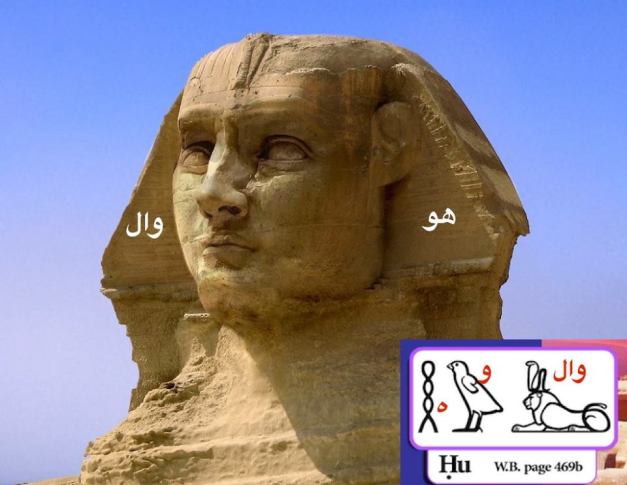


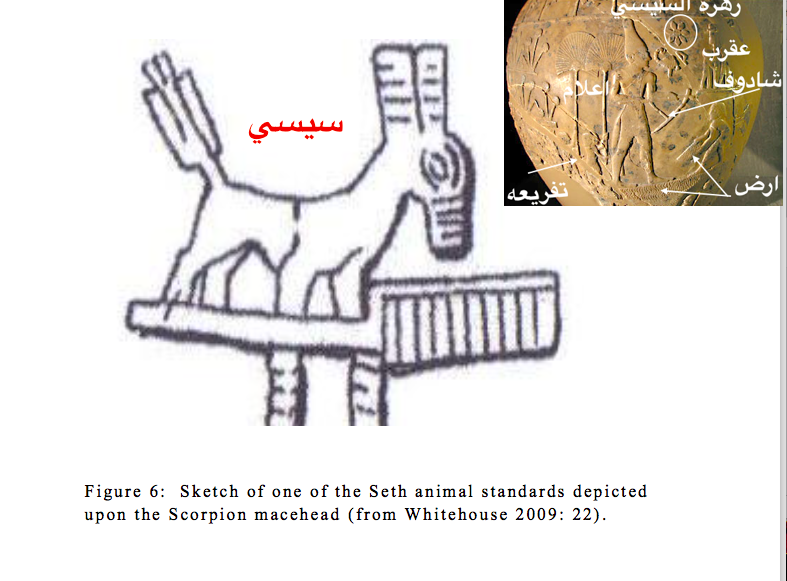

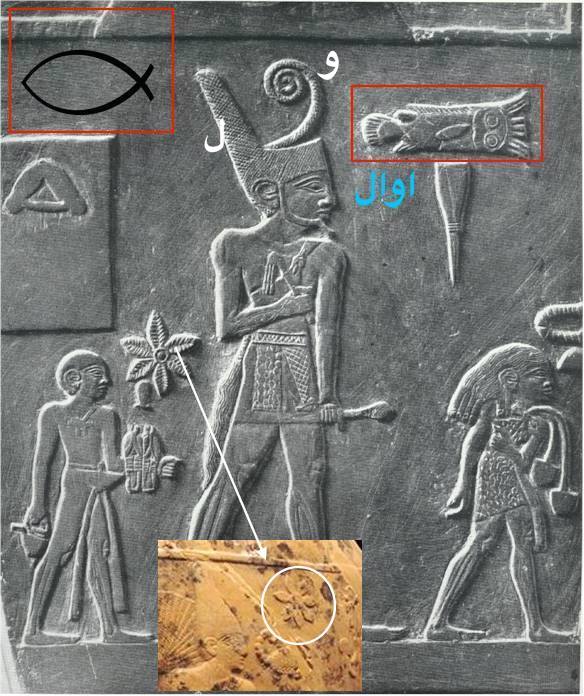
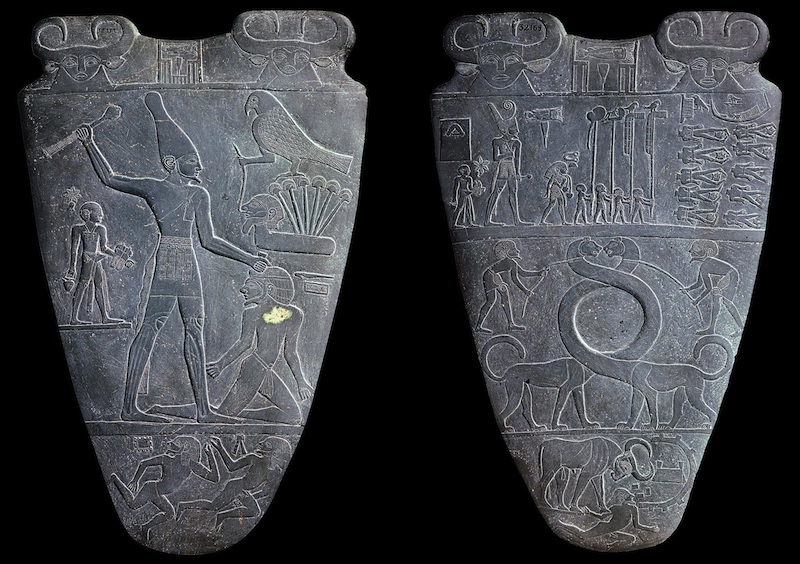


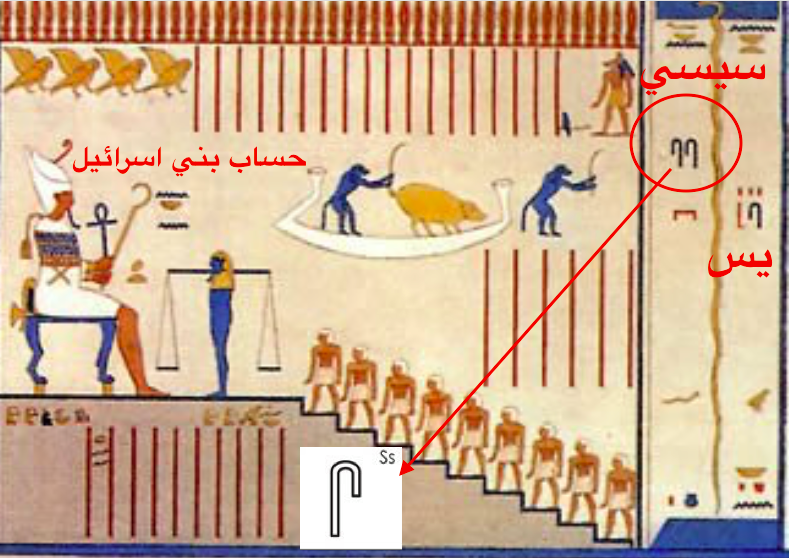

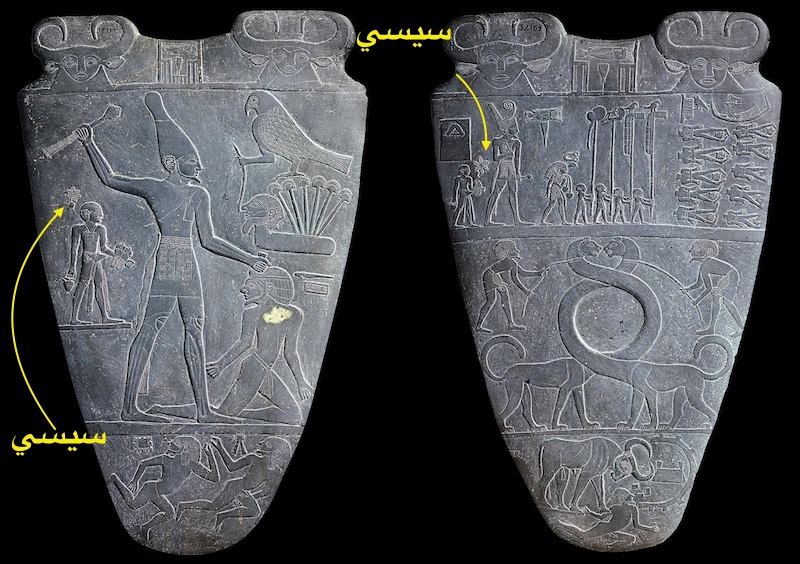
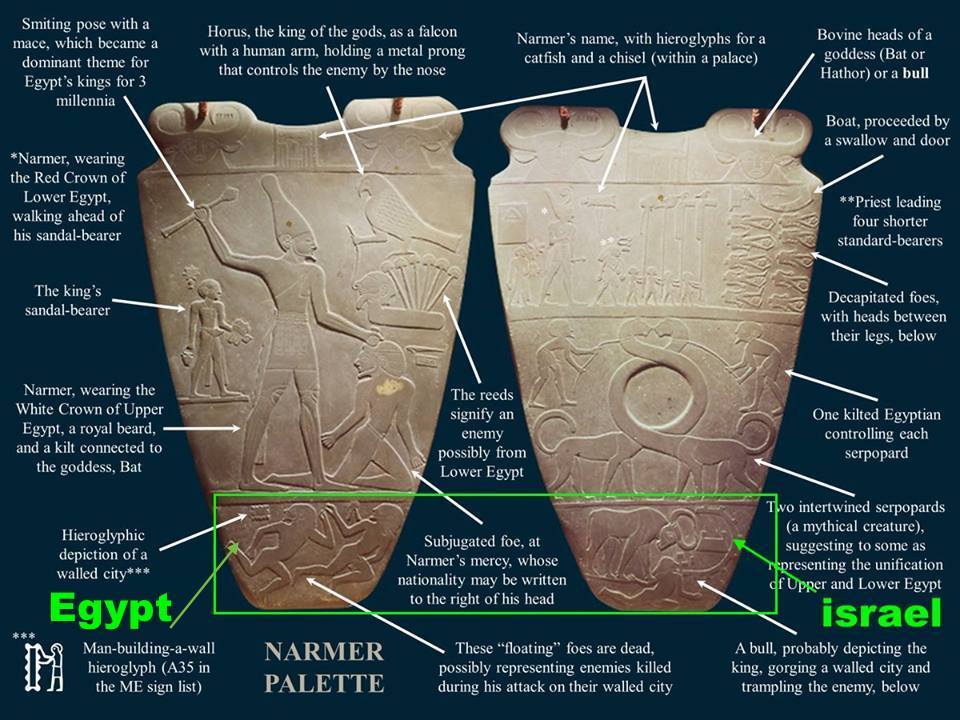
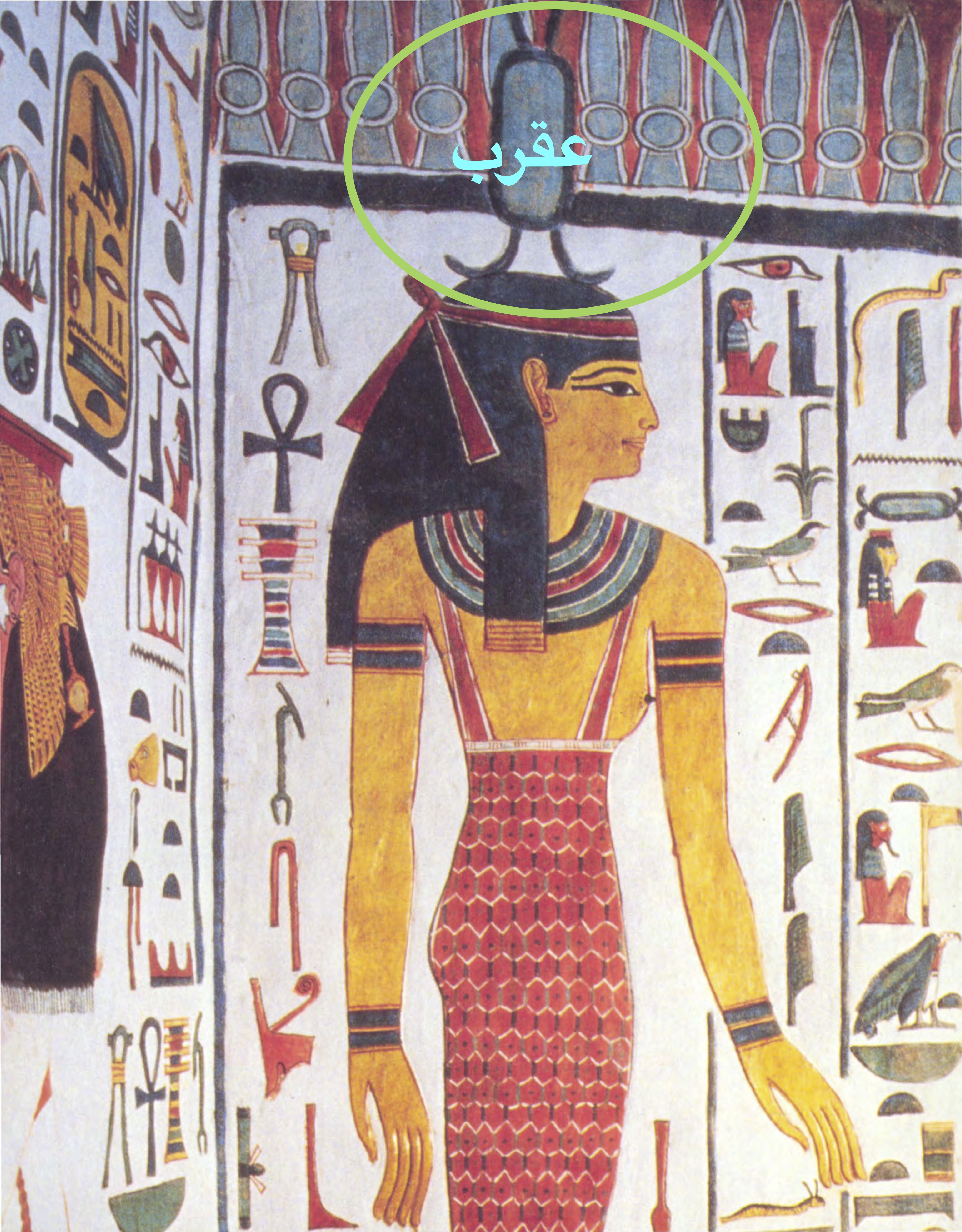

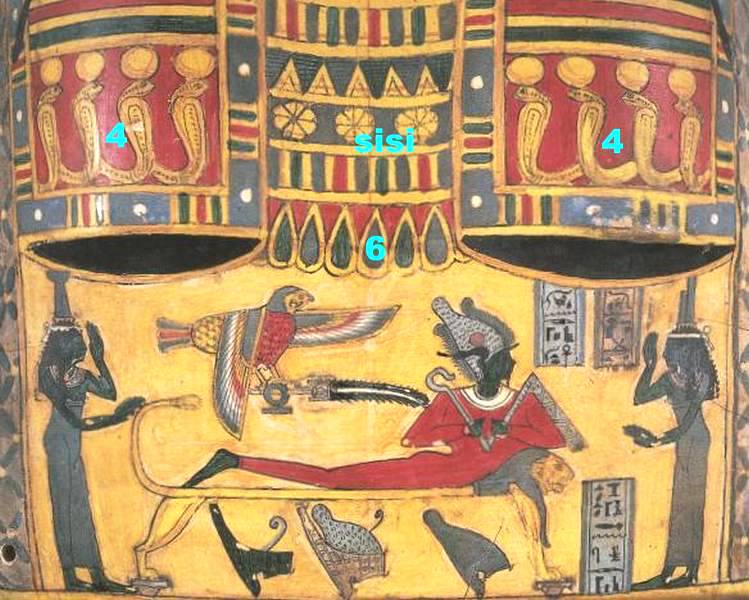


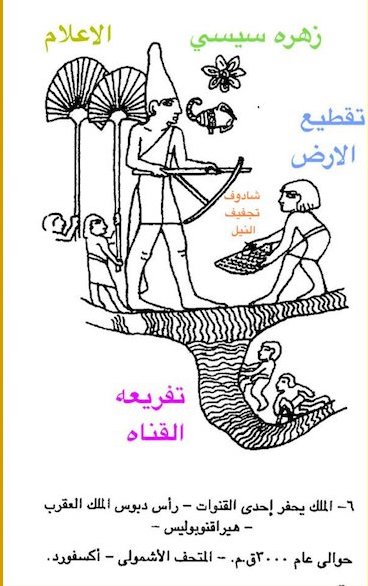 هو سيسي ليس سيثي الاول
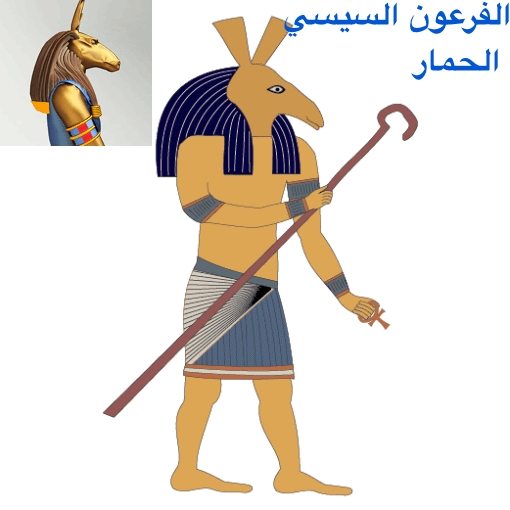


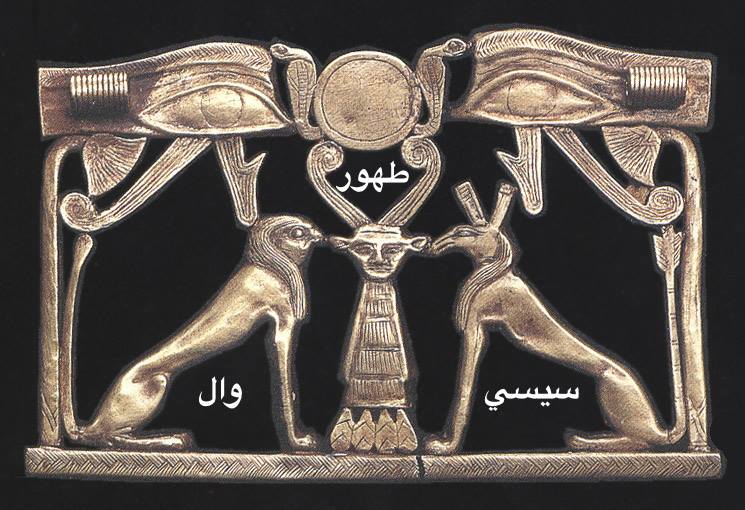


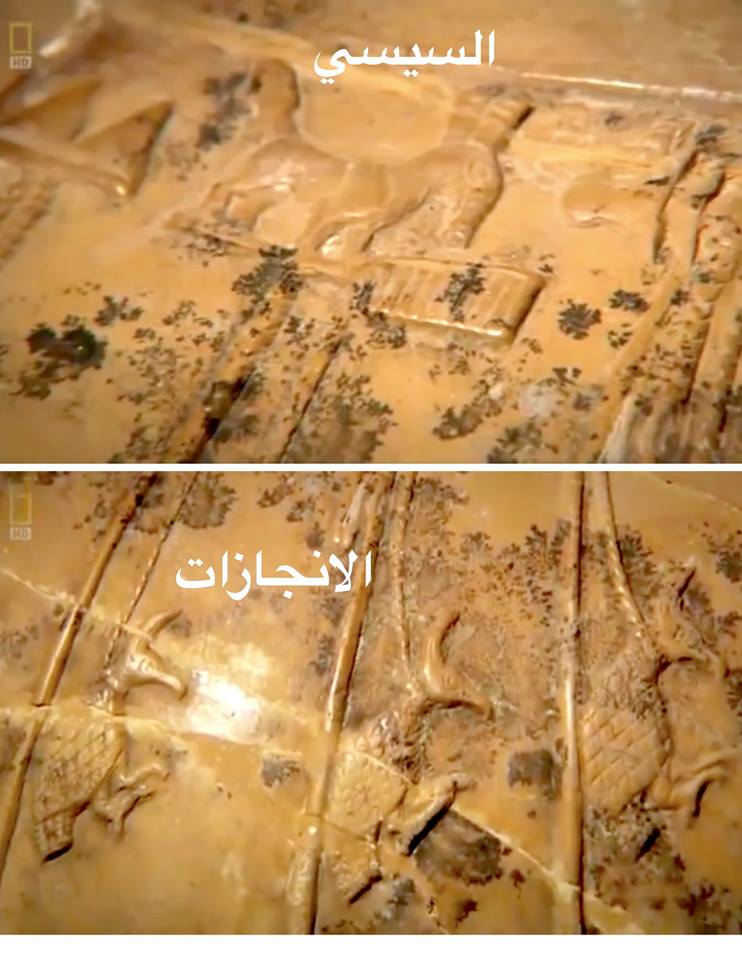

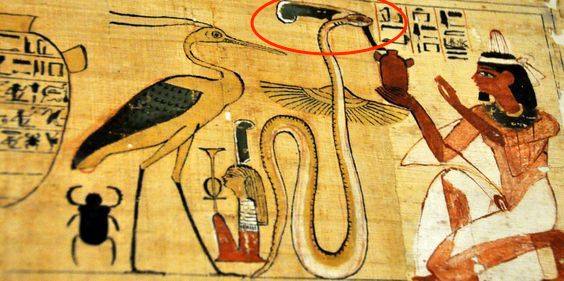

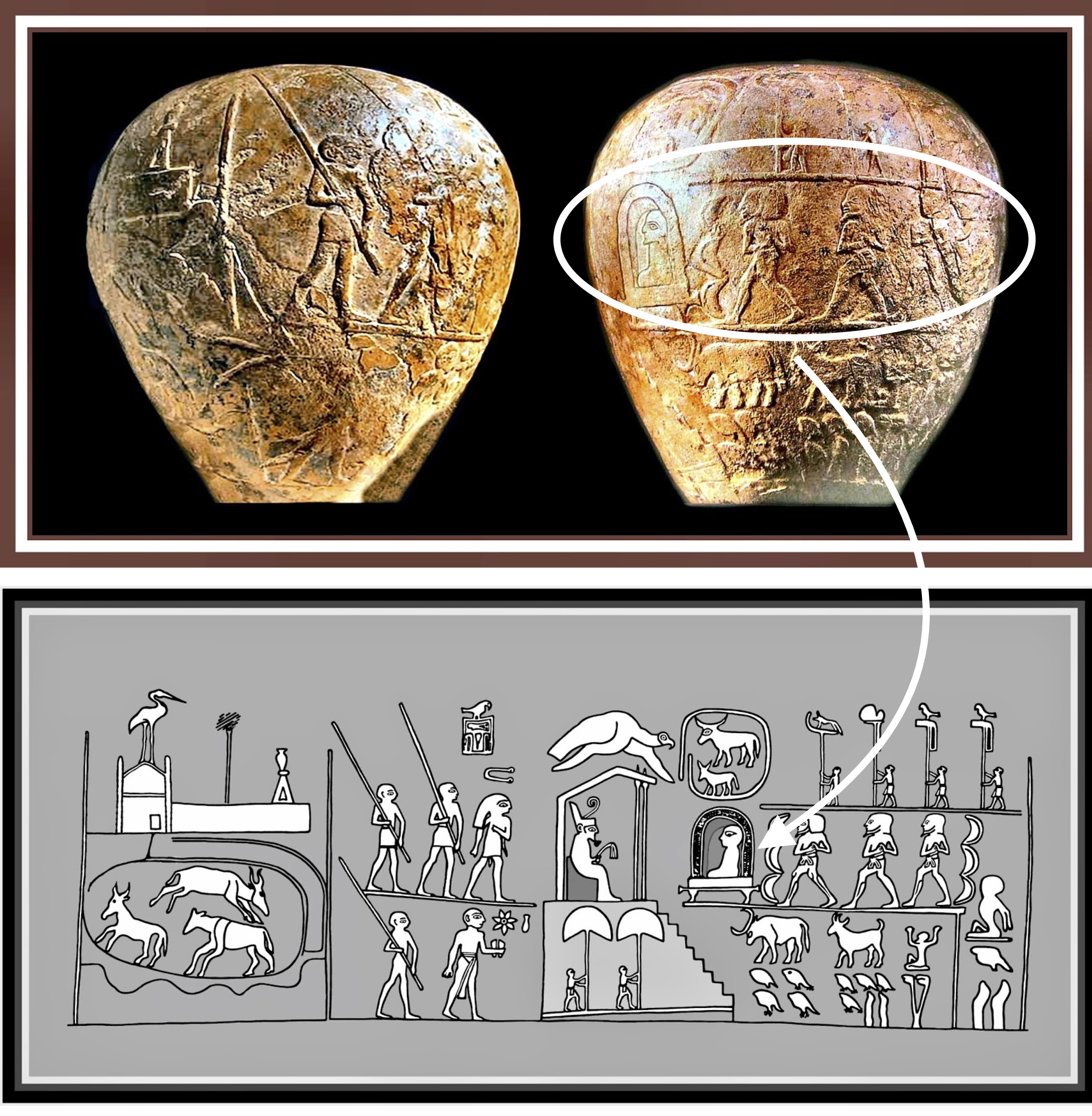






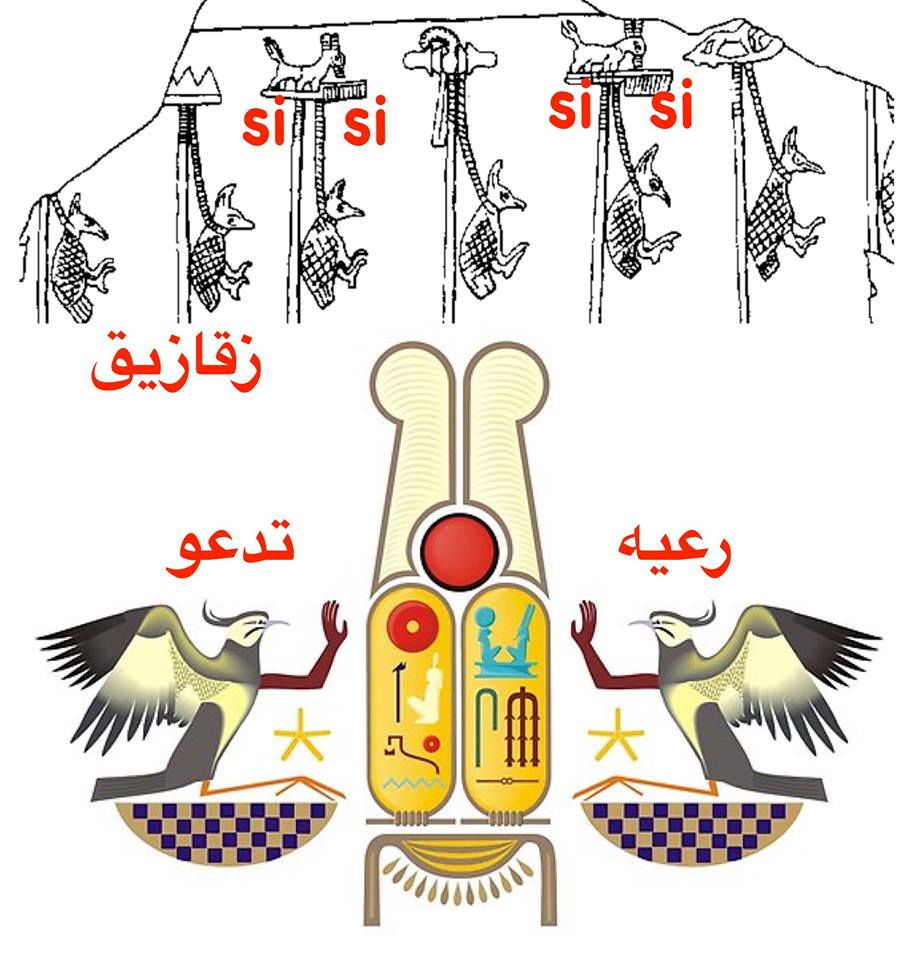







 The lost prophecy
You must be logged in to post a comment.